Showing posts with label Walking. Show all posts

Tuesday, August 18, 2020

Old Shanghai, Shanghai, China

The old Shanghai refers to a small area of Shanghai that used to be walled in and remained that way until about 1912 when all but a small section of the wall was demolished.  With the advent of the concessions, Old Shanghai became the administrative center until later when it became a shopping complex.

Now it has many restored historical buildings as well as new buildings in a somewhat traditional style that has become one of Shanghai's main tourist attractions, housing many shops and restaurants.

The "Old Town" is not exclusively old, as you still have a chance to take in the atmosphere if you wander into the quaint side streets.

But, on first viewing walking down the street towards the complex, I'm not sure I'd go as far as to say this is in reality old Shanghai, except for what appears to be a true representation of it architecturally. 

The buildings, which are shops and restaurants, are set out symmetrically, with streets, alleyways, and squares which may prove that it was specially built for the tourists, and no mechanized traffic.


Anyway...

The buildings are magnificent, and a photographer's delight, and you'd finish up having hundreds of photos by the time you leave.  All the buildings are exquisite representations of traditional Chinese architecture. 


As for buying stuff, remember if you're not Chinese you have the sucker tourist stamp on your forehead, so be prepared to walk away if the vendors will not bargain.  

Nothing here is worth the price tag and in our group discounts like from 130 RMB to 50 RMB and from 1 for 1,200 to 2 for 950 RMB are common.

Here common t-shirts that we can get for 3 dollars back home start at 150 RMB which is roughly 35 dollars.  It's that kind of market.

We end up is a tea room, on the third floor of the meeting point below, and discover all the tour guides sitting around a table counting money, and I have to say it's the most $50 notes I've ever seen in one place.  

It is, we were told, where they discussed 'strategy'.

Friday, August 14, 2020

The French Quarter, Shanghai, China

The French Quarter and Shake Shack 

The Shanghai French Concession was a foreign concession in Shanghai, China from 1849 until 1943 and came to an end in 1943.  It was established on 6 April 1849, when the French Consul to Shanghai obtained a proclamation that conceded certain territory for a French settlement.

The area covered by the former French Concession remained the premier residential and retail district of Shanghai.

The French Quarter is an area west of the Bund, about 8km long comprising a number of small streets and is a highly desired area for non-Chinese to live.  Wukang Lu is a beautiful street, quaint and pretty, with outdoor cafes sprinkled here and there.  While on Wukang Lu, you wouldn't want to miss checking out Ferguson Lane on 376 Wukang Lu.  It is a charming pedestrian space with outdoor restaurants and wine bars.

If you're expecting a whole range of French restaurants forget it.  It's simply a collection of restaurants selling various types of food, and little else.

There is a shopping mall, further away from where the restaurants supposedly are, but there's little interest in finding them.  The happy house is far more important.

We settle, back in the French Quarter, in a place called the Shake Shack, located at No.10 Xintiandi North Block, Lane 181 Taicang Road, Huangpu District Xintindi 10-12 North Block, Shanghai, China.

I originally thought was the Snake Shack.  On closer inspection, and after being handed a menu, we discover it's a hamburger place.  Below is an idea of some of what the restaurant serves:

shakeshack

Is it like McDonald's, no.  The burger meat is real and the whole hamburger is absolutely delicious.  So are the fries, which are smallish well-cooked crinkle cut chips.

I had ice tea, which was real ice tea, not the sugary concoction you find in bottles, and the lemonade was real as well.

Value for money?  The prices were a little steep but, in my opinion, yes.  I'd go back again if I knew how to get there.


Monday, August 10, 2020

The Bund, Shanghai, China

The Bund

The architecture along the Bund or Waitan is a living museum of the colonial history of the 1800s.  The area centers on a section of Zhongshan Road within the former Shanghai International Settlement.

The word bund means an embankment or an embanked quay.   It was initially a British settlement; later the British and American settlements were combined in the International Settlement.

The Bund is a mile-long stretch of waterfront promenade along the Huangpu River. There are 52 buildings of various architectural styles, including Gothic, baroque, and neoclassical styles. The area is often referred to as "the museum of buildings". 

Building styles include Romanesque Revival, Gothic Revival, Renaissance Revival, Baroque Revival, Neo-Classical or Beaux-Arts, as well as a number in Art Deco style.

Having seen these buildings initially the night before, mostly lit up, our viewing this morning was from the land side, and particularly interesting in that the colonial architecture was really fascinating considering their location, but not surprising given Shanghai's history.  A lot of these buildings would be more at home in London, that out in the far east.


The Bund waterfront is about two kilometers long and impossible to cover in the time allowed for this part of the tour.


There was just enough time to get photos of the waterfront and the old buildings.


Some of these buildings had odd shapes, like one on the far right that looks like a bottle opener.


And, for some odd reason, a bull.


On the other side of the water, the sights that had been quite colorful the night before, were equally impressive though somewhat diminished by the haze.

Tuesday, May 26, 2020

The Forbidden City, Beijing, China

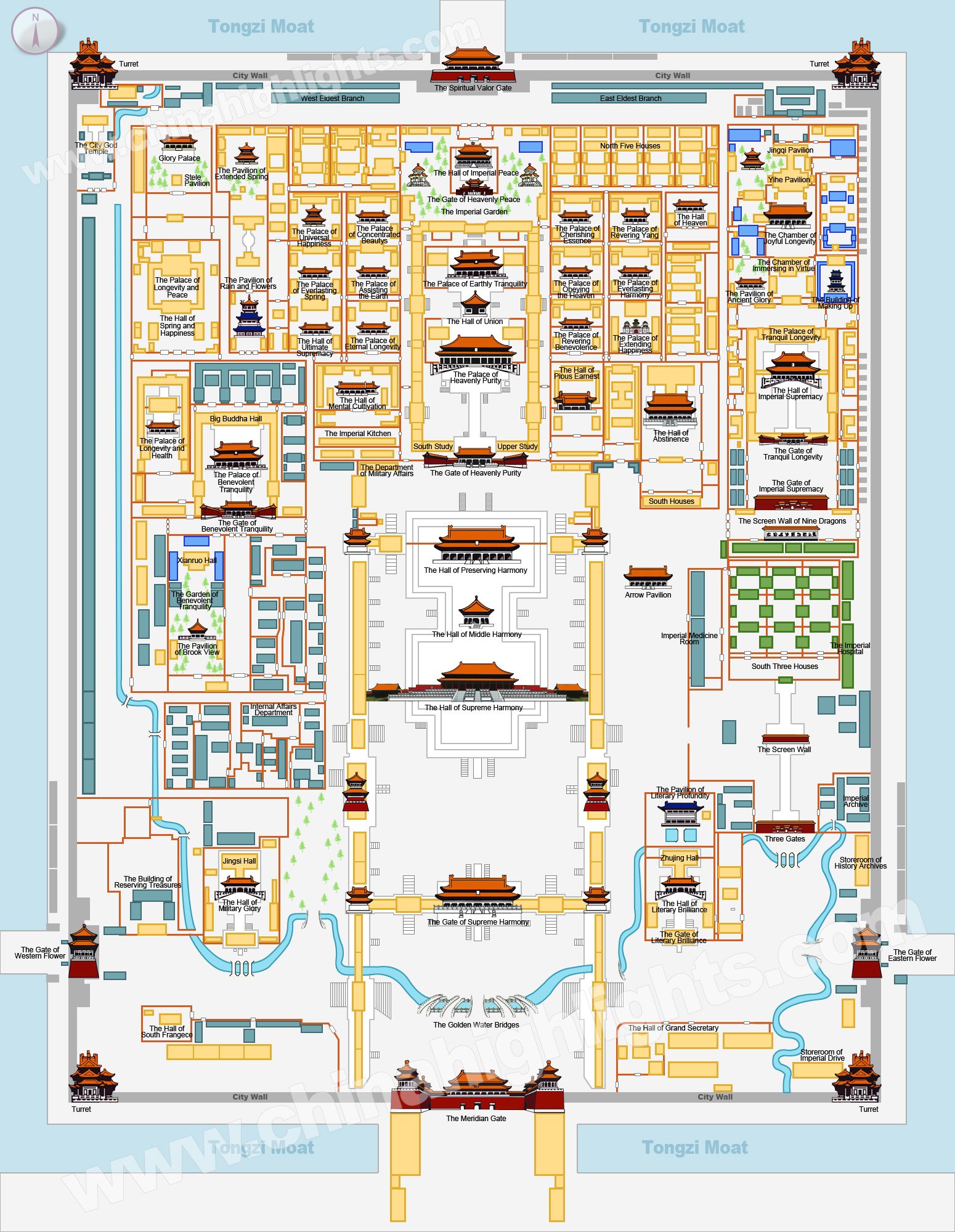
Now we're walking to the Forbidden City, and it seems like we're walking for miles and we're practically exhausted before we get started on the main tour.  I'm not sure if we received a map of the city, but one is certainly needed so that you can navigate the many features, buildings, and walkways.


There are tour groups everywhere in the large courtyard outside the gate, most likely getting a lecture on the last of the Chinese emperors about that time Sun Yat-Sen proclaimed the new China around 1912.  We were no exception, and it was an interesting way to spend the time waiting to get in.  It was a tale of intrigue, interwoven with a 3-year-old emperor, and a scheming concubine who becomes the Emperor's favorite, enough to bear him a son and successor.

Bribery and corruption at its best.

But its history runs something like this:

The Forbidden City is was once the imperial and state residence of the Emperor of China, as well as the center of government, from the Ming Dynasty to the Qing Dynasty, or 1420 to 1924.

It was built from 1406 to 1420 when the Yongle Emperor moved the capital from Nanking to Beijing and consists of about 980 buildings, and 8,886 bays of rooms (not the 9,999 as prescribed in myth) and covers 180 acres.  Over the 14 years, a million workers used whole logs of wood from the jungles of southwestern China, marble from quarries near Beijing, specially made golden bricks from Suzhou


Since 1925 it has been a museum and is the largest number of preserved wooden structures in the world.


The city is surrounded by a wall 7.9 meters high, and a moat that is 6 meters deep and 52 meters wide.  A tower sits at each of the four corners.  Each side has a gate, the north is called the Gate of Divine Might, the south is called the Meridian gate.  East and west are called East Glorious Gate and West Glorious Gate respectively.


But, back in the courtyard, we are ready to go in and follow the tour guide who has switched from her amplified microphone to a whisper device we all wear in our ears.  She talks and we listen.

We all make it through and regroup on the other side. This is where the fun begins because we are about to meet a large percentage of the 80,000, they let for the day.


It seems to me they have all arrived at the same time, although by the time we get to the entrance gate, it is very well organized, bags are scanned, people are scanned, and you're in.  

After crossing one of the seven Golden Water bridges, you begin to get some idea of the size and scope of the City, and in the distance, the first of the buildings, The Gate of Supreme Harmony.  On a hot day, that could be a long and thirsty walk.


From there it is one pagoda after another with buildings that surround the edge of the whole Forbidden City, as does the moat.


By the time we get to the second courtyard, it was time to have ice cream as a refresher.  Others head up to another exhibit, and it's just too many stairs for us.

After this, it's a walkthrough another courtyard, heading up and down some more stairs, we go and see the museum, with priceless relics from past emperors.


There are areas like the outer courtyard, the inner courtyard, yet another courtyard, and the gardens where the concubines walked and spent their leisure time.  It is not far from the emperor's wives living quarters, though there's precious little left of the furniture, other than a settee and two rather priceless so-called Ming dynasty vases.

We get into the bad habit of calling all of the vases Ming dynasties.  Above is one of the inner courtyards there were living quarters, and that tree is over 300 years old.


Out through some more alleyways and through an entrance that led to the area where the concubines lived, very spacious, bright, and filled with trees, plants, and walkways through rocky outcrops.


The whole area was made up of living quarters and waterways, rocks and paths, all very neatly set out, and it looked to be a very good place to live.


This is an example of the living quarters, overlooking the gardens

 And there were several pagodas


From there its a quick exit out the northern entrance, and another longish walk to our bus, which arrives at the meeting point shortly after we do.


That done, the Beijing tour guide has completed her section of our China experience, and we're ready to move onto the next, but not before getting onto the high-speed train and head for X'ian.

And a new tour guide by the name of Sam.

Monday, September 30, 2019

A trip to China - Day 10 - A day in Shanghai, sort of - The Yu Gardens


The Yu Gardens


These gardens house a lot of buildings that seemed to be a perfect blend of the old and the new, and if it was up to me, I’d keep the old.  Both the building and the gardens they are set in are like an oasis in the middle of an industrial complex, and perhaps impractical for the number of people living in Shanghai.


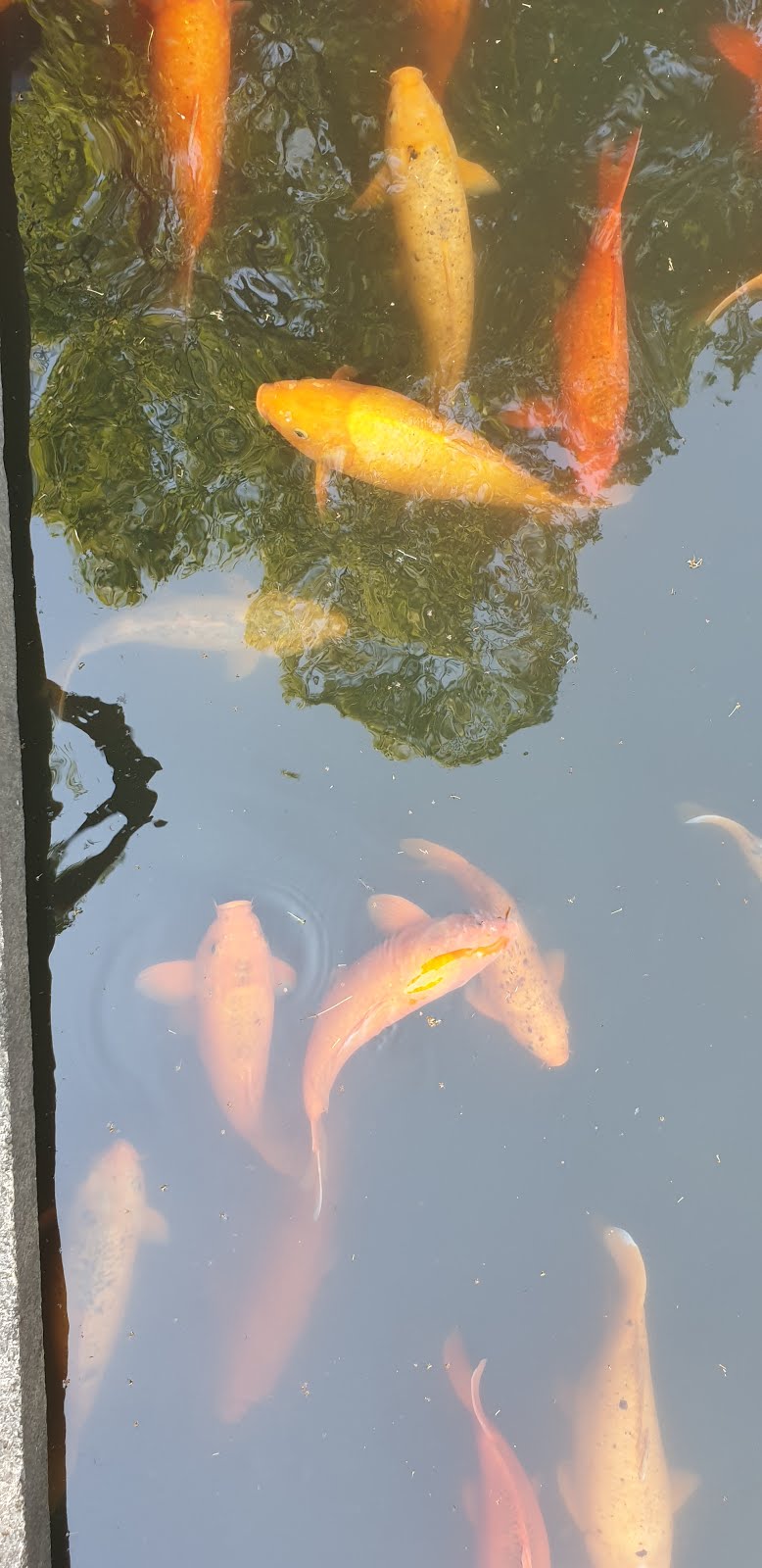
All of the ponds had a lot of fish in them


It was a pleasant afternoon, for both a stroll through the gardens


In and out of the rockery on narrow pathways


And to look inside the buildings that were sparsely furnished


There was even an area set aside for entertainment.


Friday, September 27, 2019

A trip to China - Day 10 - A day in Shanghai, sort of - Lunch, and Old Shanghai

 
The French Quarter and shake shack 

If you're expecting a whole range of French restaurants forget it.  It's simply a collection of restaurants selling various types of food, and little else.

There is a shopping mall, further away from where the restaurants supposedly are, but there's little interest in finding them.  The happy house is far more important.

We settle, back in the French Quarter, in a place called the shake shack, which I originally thought was the snake shack.  On closer inspection, and after being handed a menu, we discover it's a hamburger place.

Is it like McDonald's, no.  The burger meat is real and the whole hamburger is absolutely delicious.  So are the fries, which are smallish well-cooked crinkle cut chips.

I had ice tea, which was real ice tea, not the sugary concoction you find in bottles, and the lemonade was real as well.

Value for money?  The prices were a little steep but, in my opinion, yes.  I'd go back again if I knew how to get there.


Old Shanghai

I'm not sure I'd go as far as to say this is in reality old Shanghai, but a true representation of it architecturally, yes it is.  The houses, which are shops, are set out symmetrically, with owners, alleyways and squares which may prove that it was specially built for the tourists.


Anyway...

The buildings are magnificent, and a photographers delight, and you'd finish up having hundreds of photos by the time you leave.


As for buying stuff, remember if you're not Chinese you have the sucker tourist stamp on your forehead, so be prepared to walk away if the vendors will not bargain.  Nothing here is worth the price tag and in our group discounts like from 130 RMB to 50 RMB and from 1 for 1,200 to 2 for 950 RMB are common.

Here common t-shirts that we can get for 3 dollars back home start at 150 RMB which is roughly 35 dollars.  It's that kind of market.

We end up is a tea room, on the third floor of the meeting point below, and discover all the tour guides sitting around a table counting money.  It is we were told where they discussed 'strategy'.


Thursday, September 26, 2019

A trip to China - Day 10 - A day in Shanghai, sort of - The Bund


The Bund

This was from the land side, after having seen it at night with all the lights, this time it was during the day, and particularly interesting in that the colonial architecture was really fascinating considering their location, but not surprising give Shanghai's history.


The Bund waterfront is about two kilometres long and impossible to cover in the time allowed for this part of the tour.


There was just enough time to get photos of the waterfront and the old buildings.


Some of these buildings had odd shapes, like one on the far right that looks like a bottle opener.


And, for some odd reason, a bull.


On the other side of the water, the sights that had been quite colourful the night before, were equally impressive though somewhat diminished by the haze.


Sunday, June 16, 2019

A trip to China - Day 4 - The Forbidden City

The Forbidden City

Now we're walking to the Forbidden City, and it seems like we're walking for miles and we're practically exhausted before we get started on the main tour.

There are tour groups everywhere in the large courtyard outside the gate, most likely getting a lecture on the last of the Chinese emperors about that time Sun Yat Sen proclaimed the new China around 1912.  It was a tale of intrigue, interwoven with a 3-year-old emperor, and a scheming concubine who becomes the Emperor's favourite, enough to bear him a son and successor.

Bribery and corruption at its best.


But, back in the courtyard, we are ready to go in and follow the tour guide who has switched from her amplified microphone to a whisper device we all wear in our ears.  She talks and we listen.

We all make it through and regroup on the other side. This is where the fun begins because we are about to meet a large percentage of the 80,000, they let for the day.


It seems to me they have all arrived at the same time, although by the time we get to the entrance gate, it is very well organised, bags are scanned, people are scanned, and you're in.  

From here, we have to cross one of the seven bridges leading to the outer courtyard.


From there it is one pagoda after another with buildings that surround the edge of the whole Forbidden City, as does the moat.


By the time we get to the second courtyard, it was time to have ice cream as a refresher.  Others head up to another exhibit, and it's just too many stairs for us.

After this, it's a walk through another courtyard, heading up and down some more stairs, we go and see the museum, with priceless relics from past emperors.


There are areas like the outer courtyard, the inner courtyard, yet another courtyard, and the gardens where the concubines walked and spent their leisure time.  It is not far from the emperor's wives living quarters, though there's precious little left of the furniture, other than a settee and two rather priceless so-called Ming dynasty vases.

We get into the bad habit of calling all of the vases Ming dynasties.  Above is one of the inner courtyards there were living quarters, and that tree is over 300 years old.


Out through some more alleyways and through an entrance that led to the area where the concubines lived, very spacious, bright, and filled with trees, plants, and walkways through rocky outcrops.


The whole area was made up of living quarters and waterways, rocks and paths, all very neatly set out, and it looked to be a very good place to live.


This is an example of the living quarters, overlooking the gardens

 And there were several pagodas


From there its a quick exit out the northern entrance, and another longish walk to our bus, which arrives at the meeting point shortly after we do.


That done, the Beijing tour guide has completed her section of our China experience, and we're ready to move onto the next, but not before getting onto the high-speed train and head for X'ian.

And a new tour guide by the name of Sam.