Showing posts with label Flowers. Show all posts

Tuesday, August 25, 2020

Time to review the last 10 days, Shanghai, China

 At least today we are able to sleep in, until 8 o'clock.  I'm not sure that means we are in any way shape or form invigorated, but at least it was not another 5:30 wake up for yet another exhausting day in the field.

After the long leisurely dinner last night, a welcome change from fretting over what we could and could not eat, it seemed the perfect end to a long and, at times, grueling tour.

Not participating in the knock off shopping tour, we stay at the hotel till we have to leave our rooms, then go downstairs and sit in the guest lounge on the ground floor until the bus comes to take us to the airport.

It's a time to summarise the tour.

We have seen China that the Chinese government wanted us to see.  That urban sprawl is a model of urban living in cities that have 7 million or more.  Two we visited had 10 million-plus, Beijing has 24 million and Shanghai has 27 million.

We saw hundreds of kilometers of rice paddies from the train which means their agriculture industry is huge.  What we didn't see was any animals like sheep, cattle, or pigs.  They're out there somewhere but not for us to see.

We saw a lot of power stations, and when you visit the cities you find out why.  Everything is electric.  And for the majority of our visit we do not see much pollution, though as we got closer to Shanghai, there was a lot more haziness.  Luckily on most days, there was a wind that helped clear the air.

The other thing that is very noticeable is the places you are taken to purchase goods that are government-owned factories so allegedly you can buy with confidence that what you're getting is real, not fake and you will get an iron-clad guarantee to that effect.

But it will cost an arm and a leg.  Nothing in any of these so-called factories is cheap.

The Chinese medicine shop, the pills they recommend for everyone are about 400 to 500 dollars Aus for a three month supply, for any type and there can three types so you're instantly looking at over a thousand Australian dollars right there.

At the pearl factory, the cost of everything is more subjective relative to whether or not you want it, but as a guide, it can cost you somewhere between 250 to 1,000 dollars Australian.

At the jade factory, everyone wants a jade bangle for good luck and good fortune, until they see how much it costs.  Here you are considered lucky if you walk away from the place with change from 2,000 dollars Australian.

Next is the terra cotta replica factory, and here there are model soldiers of all sizes and prices, with other pricier goods.  It's possible to escape this place for under 100 dollars Australian.

Lastly there us the silk factory and here for today only, it begins to sound like one of those infomercials on the morning show, the one that makes you turn off the telly or switch over to the  
ABC because anything on there has to be better.

But...

We still buy the sheet the underlay the silk pillowcases and, you guessed it, free pillows were thrown in.  And, yes, it's not steak knives but a suitcase, yes, you heard it right, a suitcase to take it all home in, or free shipping if you spend a million dollars.  Well not quite that much, but it feels like it.

And yet there's more, the tea factory, the tour taken from a single room followed by the sales pitch where we are shocked and amazed by the properties of the tea.  Of course, it's great if I swallow a bottle full of iodine  The tea will just neutralize its effect, but as a tea, well just have to wait and see.

Yes, there are pills too, and these are also very expensive, a six month supply will set you back 1,800 dollars Australian.

So between all of the above, the smaller merchants haven't got a chance because after hitting the big six there's nothing left, or room left in your baggage if you took it with you.

At each venue, the tour guide gives you a long spiel, which is considered to be the softening up process before the real guide for the venue takes over to give the overall lecture on the product, and it's the manufacturing process.

By then, it's simply a matter of telling us the days bargain, but by that time all we want to do is escape, and, for some of us, get the goods and leave.  The dangling of free shipping entices us to buy more than we were going to, but in the end, the ploy works.

The government must be making a small fortune from this inflow of supposedly rich tourists.  Make the tour cheap, guide the tourists to the government factories, and bingo it's win-win for them and the guides who all get a cut of the action.

But...

What about the guides themselves.

Some are really good and some are terrible, and by that, I mean really terrible.  It also depended on their English of which none could speak it without the inevitable conversion issues, and for others, well, it was painful.

We started with one of the best and we finished with one of the best, but each had their tormentors in the English language, and sometimes they struggled to find an English translation. In these cases, it only made the tour all that more enjoyable.

As for the bad guides, it ruined the whole day, as it did for us with the Shaolin temple and kung fu display.  What's worse it was the most expensive and it would have been more preferable to sit in the hotel all day.

There was so much disparity in the meals supplied and the cost.  There was nothing free except for breakfast.  Perhaps the worst was at the Shaolin temple, not so much the food which was quite bland, but in what they gave you to drink.  There was no cold water to drink with it, only hot water, and you had to pay extra for anything else other than water, and it was expensive.

As the most expensive side tour of the itinerary, including all drinks would have made the rest of the day's shortcomings more tolerable.

In contrast, the previous meal we had at the Terra Cotta Soldiers exhibition was incredible and came with all the drinks you could want, and it only cost 60 RMB, or about 13 dollars Aus.  Even the evening dinner in Hutong, an amazing array of Chinese dishes accompanied by free drinks at a higher cost made that from the Temple more disappointing.

Most of us couldn't believe what had happened at the Temple lunch and the guides response when we asked for, at the very least, cold water.  She completely ignored us and pretended it didn't happen.
As I said, there were good guides and terrible guides.  She was terrible. 

But, hang on, the other bus said their guide was worse.

And the Hotels?

God give me patience.

This is where, after the second hotel our group came up with the expression, 'it is what it is'.

All of them looked very impressive from the outside and going into the foyer level that impression improved with all the marble and expensive fittings.

But, sadly, in most cases, that's where the good impression ends.

The few lifts are small and usually fit four people and their cases.  All well and good except when seven buses are using the same hotel, then it can take upwards of half an hour to get you your room.

Which is where shock sets in.

Rooms can be so small you couldn't swing a cat in them, the doors barely getting past the bed end and the distance between the end of the bed and the tv on the wall less than a foot.

Others you don't get a proper bathroom, just a shower, and toilet cubicle and in the passage a washbasin.

Others, you get a large room and a bathroom with a bath and a separate shower.

And something else that I thought was quite odd, very few of the same tour group are allocated rooms on the same floor, so our group of 28 were scattered throughout the hotel on each occasion.

My overall impression, we were using old hotels that are now very tired according to trip advisor,  because discerning visitors are using the better hotels that still don't cost much more than these for a standard room.

Trip a deal could do better if they wanted to.

But as I said, it is what it is and it's not as if you're going to spend the rest of your life in any of those rooms.  Besides isn't that half the fun, finding the completely unexpected,  after all this is China and we cannot expect to find what we're used to here.


Tuesday, August 18, 2020

The Yu Gardens, Shanghai, China

The Yu Gardens or Yuyuan Gardens

The Yu Gardens (or Yuyuan Gardens) are located at No. 137, Anren Street, Huangpu District, very close to the Old City God Temple, in the northeast of the Old City of Shanghai at Huangpu.

Yu Garden was first built in 1559 during the Ming Dynasty by Pan Yunduan and finished approximately 1577, created specifically as a private garden of the Pan family for Pan Yunduan’s parents to enjoy in their old age.

Yu Garden occupies an area of 5 acres, and is divided into six general areas:

  -Sansui Hall which includes the Grand Rockery was originally used to entertain guests,

  -Wanhua Chamber is a delicate building surrounded by derious cloisters,

  -Dianchun Hall, built in 1820, includes Treasury Hall and the Hall of Harmony,

  -Huijing Hall which includes Jade Water Corridor.

  -Yuhua Hall which is furnished with rosewood pieces from the Ming Dynasty, and,

  -The Inner Garden with rockeries, ponds, pavilions, and towers; first laid out in 1709.  As the quietest part of Yu Gardens, it includes the Hall of Serenity and the Acting and Singing Stage.

The Mid-Lake Pavilion Teahouse, within the gardens, is the oldest teahouse in Shanghai.

A centerpiece of the gardens is the Exquisite Jade Rock, a 5-ton boulder that was originally meant for the Huizong Emperor (Northern Song Dynasty from 1100-1126 AD) but was salvaged from the Huangpu River after the boat carrying it had sunk.


These gardens house a lot of buildings that seemed to be a perfect blend of the old and the new, and if it was up to me, I’d keep the old.  Both the building and the gardens they are set in are like an oasis in the middle of an industrial complex, and perhaps impractical for the number of people living in Shanghai.


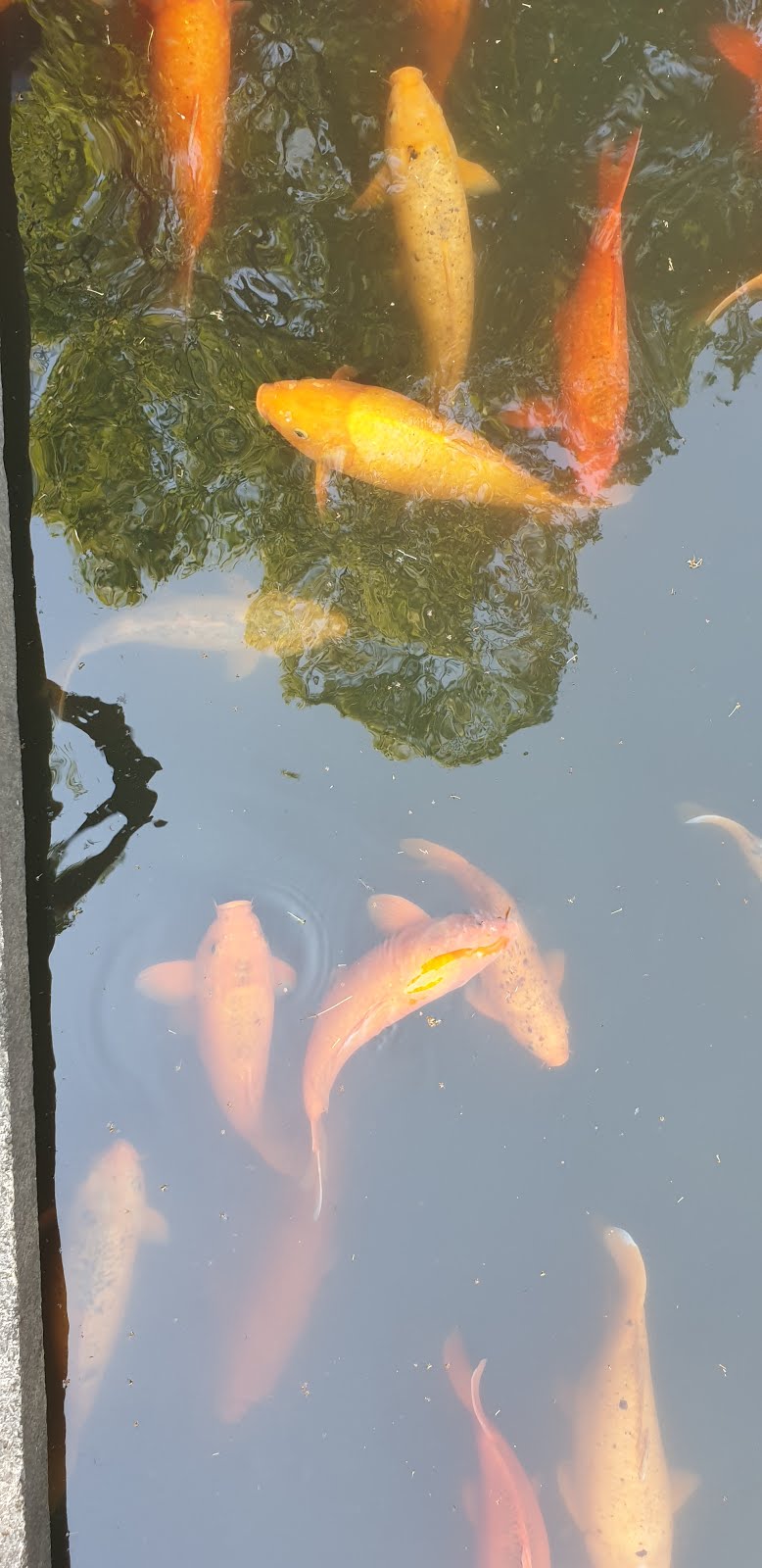
All of the ponds had a lot of fish in them


It was a pleasant afternoon, for both a stroll through the gardens


In and out of the rockery on narrow pathways


And to look inside the buildings that were sparsely furnished


There was even an area set aside for entertainment.


Monday, July 27, 2020

West Lake, Hangzhou, China. The gardens, and a cruise on the lake.

Next is our visit to the West Lake and surrounding gardens

West Lake is a freshwater lake in Hangzhou, China. It is divided into five sections by three causeways. There are numerous temples, pagodas, gardens, and artificial islands within the lake.

Measuring 3.2 kilometers (2 miles) in length, 2.8 kilometers (1.7 miles) in width, and 2.3 meters (7.5 feet) in average depth, the lake spreads itself in an area totaling 6.5 square kilometers (2.5 square miles).

The earliest recorded name for West Lake was the "Wu Forest River", but over time it changed to two distinct names.  One is "Qiantang Lake", due to the fact that Hangzhou was called "Qiantang" in ancient times.  The other, "West Lake", due to the lake being west of the city


It's about to get busy, with a number of activities planned, and the warmth of the day is starting to make an impact.

The tour starts in the car park about a kilometer away, but the moment we left the car park we were getting a taste of the park walking along a tree-lined avenue.


When we cross the road, once again dicing with death with the silent assassins on motor scooters.


We are in the park proper, and it is magnificent, with flowers, mostly at the start hydrangeas and then any number of other trees and shrubs, some carved into other flower shapes like a lotus.


Then there was the lake and the backdrop of bridges and walkways.

.

And if you can tune out the background white noise the place would be great for serenity and relaxation.


That, in fact, was how the boat ride panned out, about half an hour or more gliding across the lake in an almost silent boat, by an open window, with the air and the majestic scenery.


No, not that boat, which would be great to have lunch on while cruising, but the boat below:


Not quite in the same class, but all the same, very easy to tune out and soak it in.


It was peaceful, amazingly quiet, on a summery day


A pagoda in the hazy distance, an island we were about to circumnavigate.

Of all the legends, the most touching one is the love story between Bai Suzhen and Xu Xi'an. Bai Suzhen was a white snake spirit and Xu Xi'an was a mortal man.

They fell in love when they first met on a boat on the West Lake, and got married very soon after.

However, the evil monk Fa Hai attempted to separate the couple by imprisoning Xu Xi'an. Bai Suzhen fought against Fa Hai and tried her best to rescue her husband, but she failed and was imprisoned under the Leifeng Pagoda by the lake.

Years later the couple was rescued by Xiao Qing, the sister of Baisuzhen, and from then on, Bai Suzhen and Xu Xi'an lived together happily.

The retelling of the story varied between tour guides, and on the cruise boat, we had two.  Our guide kept to the legend, the other tour guide had a different ending.

Suffice to say it had relevance to the two pagodas on the far side of the lake.


There was a cafe or restaurant on the island, but that was not our lunch destination.


Nor were the buildings further along from where we disembarked.

All in all the whole cruise took about 45 minutes and was an interesting break from the hectic nature of the tour.

Oh yes, and the boat captain had postcards for sale.  We didn’t buy any.
 

Lunch


At the disembarkation point there was a mall that sold souvenirs and had a few ‘fast food’ shops, and a KFC, not exactly what we came to China for, but it seemed like the only place in town a food cautious Australian could eat at.


And when tried to get in the door, that's where at least 3 busloads were, if they were not in the local Starbucks.  Apparently, these were the places of first choice wherever we went.

The chicken supply by the time we got to the head of the line amounted to pieces at 22.5 RMB a piece and nuggets.  Everything else had run out, and for me, there were only 5 pieces left.  Good thing there were chips.

And Starbucks with coffee and cheesecake.

At least the setting for what could have been a picnic lunch was idyllic.


Tuesday, March 31, 2020

Tiananmen Square, Beijing, China


Tiananmen Square

Some interesting facts before we get out of the bus...

Tiananmen Square or Tian'anmen Square is in the centre of Beijing name after the Gate of Heavenly Peace, a gate that one separated the square from the Forbidden City.

The Square contains,

   the Monument to the People's Heroes
   the Great Hall of the People
   the National Museum of China
   the Mausoleum of Mao Zedong.

The square is about 109 acres and was designed and built in 1651, and since then been enlarged four times since, the most recent upgrade in the 1950s.

The Monument to the People's Heroes

This is a ten-story obelisk built to commemorate the matters of the revolutions.  It was built between August 1952 and May 1958.  On the pedestal are reliefs depicting the eight major revolutionary episodes.

The Great Hall of the People

This was opened in September 1959, and covers 171809 square meters.  The Great Hall is the largest auditorium in China and can seat up to 10,000 people.  The State Banquet Hall can seat up to 5,000 diners.

The National Museum of China

This is one of the largest museums in the world and the second most visited museum in the world after the Louvre in Paris.   It was completed in 1959, and sits on 65 hectares, and rises four floors.  It has a permanent collection of over 1,000,000 items.

The Mauseloum of Mao Zedong

This was built shortly after his death, and completed on May 24th, 1977.  The embalmed body of the Chairman is preserved and on display in the center hall.

My own observations

This is huge; one of the largest public squares in the world, and if you're going to walk it, like we did, make sure you've been exercising before you go.  It covers 44 hectares, borders on the Forbidden City, and has a memorial to Chairman Mao in the center of it.  But you cannot go near it, it's fenced off, and it is guarded.


That's both the statue and the square as there are random guards marching in random directions all the while watching us to see that we don't misbehave.
No one wants to find out what would happen if you jumped the fence around the statue, but I'm guessing you'll have a few years to contemplate the stupidity of your actions with some very unhappy government officials.

           Around the edges of the square are huge buildings, on one side is the museum 


           and on the other is the Chinese equivalent of parliament.


           Around the sides are also large gardens


At one end, where the Forbidden City borders on the square, there's a huge flag pole flying the Chinese flag, and this too like the monument is fenced off, and guarded by members of all of their armed services.  No tanks rolled out during our visit much to our disappointment.  There is no entrance to the Forbidden City from the square

             At the other end is the Mausoleum of Mao Zedong, which was closed the day we were there, as was the museum. 

            There are four sculptural groups installed outside the mausoleum.

          Other than that, it's just another square, albeit probably one of the largest in the world.  It can, we were told, hold about a million people.

Monday, March 23, 2020

On the road to Tiananmen Square, Beijing, China


One the first things you notice when driving around Beijing, other than the roads are congested with traffic, is the number of trees and flowers that have been planted, in the median strip as well as along the edges of the road.


What you also notice is the large number of multi-story apartment blocks, which are needed to house the millions of Beijing residents.  What we have, so far, rarely seen, is single-story houses.
These continuous areas of trees and rose bushes are, every now and then, broken up by very colorful garden beds:


Nearer to the square we are able to get up close to the flowers.  These, we are told, are a variation on the rose, one that flowers for nine months of the year.


They come in a variety of colors.


And they are literally everywhere you go, on the side of the roadway, often blotting out the concrete jungle behind them.


Friday, August 30, 2019

A trip to China - Day 9 - West Lake, gardens, a cruise, and lunch


Next is our visit to the West Lake and surrounding gardens

It's about to get busy, with a number of activities planned, and the warmth of the day is starting to make an impact.

The tour starts in the car park about a kilometre away, but the moment we left the car park we were getting a taste of the park walking along a tree-lined avenue.


When we cross the road, once again dicing with death with the silent assassins on motor scooters.


We are in the park proper, and it is magnificent, with flowers, mostly at the start hydrangeas and then any number of other trees and shrubs, some carved into other flower shapes like a lotus.


Then there was the lake and the backdrop of bridges and walkways.

.

And if you can tune out the background white noise the place would be great for serenity and relaxation.


That, in fact, was how the boat ride panned out, about half an hour or more gliding across the lake in an almost silent boat, by an open window, with the air and the majestic scenery.


No, not that boat, which would be gre3at to have lunch on while cruising, but the boat below:


Not quite in the same class, but all the same, very easy to tune out and soak it in.


It was peaceful, amazingly quiet, on a summery day


A pagoda in the hazy distance, an island we were about to circumnavigate.

We did get a story about a woman who was a snake, a monk, and a man who married the woman, but the details in between were a little hazy.  Suffice to say it had relevance to the two pagodas on the far side of the lake.


There was a cafe or restaurant on the island, but that was not our lunch destination.


Nor were the buildings further along from where we disembarked.

All in all the whole cruise took about 45 minutes and was an interesting break from the hectic nature of the tour.

Oh yes, and the boat captain had postcards for sale.  We didn’t buy any.
 

Lunch


At the disembarkation point there was a mall that sold souvenirs and had a few ‘fast food’ shops, and a KFC, not exactly what we came to China for, but it seemed like the only place in town a food cautious Australian could eat at.


And when tried to get in the door, that's where at least 3 busloads were, if they were not in the local Starbucks.  Apparently, these were the places of first choice wherever we went.

The chicken supply by the time we got to the head of the line amounted to pieces at 22.5 RMB a piece and nuggets.  Everything else had run out, and for me, there were only 5 pieces left.  Good thing there were chips.

And Starbucks with coffee and cheesecake.

At least the setting for what could have been a picnic lunch was idyllic.


Tuesday, June 11, 2019

A trip to China - Day 3 - Hutong, and a genuine Chinese meal


Hutong

The brochure says: In the afternoon, take the opportunity to join an optional tour (not included) to see Beijing’s 700-year-old Hutong’s (narrow lanes) area by old fashioned pedicab. You will also visit a local family living in a courtyard style home to experience the local customs including a delicious home-cooked dinner. 

The optional tour also includes a visit to Shichahai, a historic scenic area consisting of three lakes (Qianhai, meaning Front Sea; Houhai, meaning Back Sea and Xihai, meaning West Sea), surrounding places of historic interest and scenic beauty and remnants of old-style local residences, Hutong and Courtyard.  

First, we had a short walk through the more modern part of Hutong and given some free time for shopping, but we prefer just to meander by the canal.  


There is a lake, and if we had the time, there were boats you could take.


With some time to spare, we take a quick walk down one of the alleyways where on the ground level are small shops, and above, living quarters.


Then we go to the bell and drum towers before walking through some more alleys was to where the rickshaws were waiting.

The Bell tower


And the Drum tower. Both still working today.


The rickshaw ride took us through some more back streets where it was clear renovations were being made so that the area could apply for world heritage listing.  Seeing inside some of the houses shows that they may look dumpy outside but that's not the case inside.

The rickshaw ride ends outside the house where dinner will be served, and is a not so typical hose but does have all the elements of how the Chinese live, the boy's room, the girl's room, the parent's room, the living area, and the North-south feng shui.

Shortly after we arrive, the cricket man, apparently someone quite famous in Beijing arrives and tells us all about crickets


 and then grasshoppers, then about cricket racing.  He is animated and clearly enjoys entertaining us westerners.


I'm sorry but the cricket stuff just didn't interest me.  Or the grasshoppers.


As for dinner, it was finally a treat to eat what the typical Chinese family eats, and everything was delicious, and the endless beer was a nice touch.

And the last surprise, the food was cooked by a man.