Showing posts with label Hotels. Show all posts

Monday, March 22, 2021

Eating In, Peninsula Hotel, Hong Kong

Hotel dining can be a very expensive experience, but if you are there as one of those bucket list fulfillments like we were, then it's not unusual to go the whole nine yards.

Since the stay coincided with my birthday, the first day was set aside to have dinner at the Chinese restaurant upstairs and was one of those sublime experiences.  Of course, it had to be Peking Duck, expensive champagne, and several cocktails.

Oddly enough, breakfast wasn't included in the room rate, but that seems to be normal for a lot of hotels.  It can be if you want to pay upfront, but we don't always have breakfast, particularly if we have dinner the night before.

Or can be bothered getting out of bed the next morning because quite often the breakfast hours do go with staying in bed.

During this stay, we decided to have breakfast one morning, cereal, bacon and eggs, coffee, toast, you know, the usual stuff.


No paper placemats here and the silverware was just that, silverware.  This was going to be full on old world charm.


Coffee served from a silver coffee pot, fine bone china from Staffordshire, not Thailand, tea service for milk and sugar, condiments all in a row.

The only disappointment, I don't think the eggs were free-range.


And, when the conversation dries up, there's always a steady stream of people coming and going through the front door, and the doorman is always at the ready to open the door.


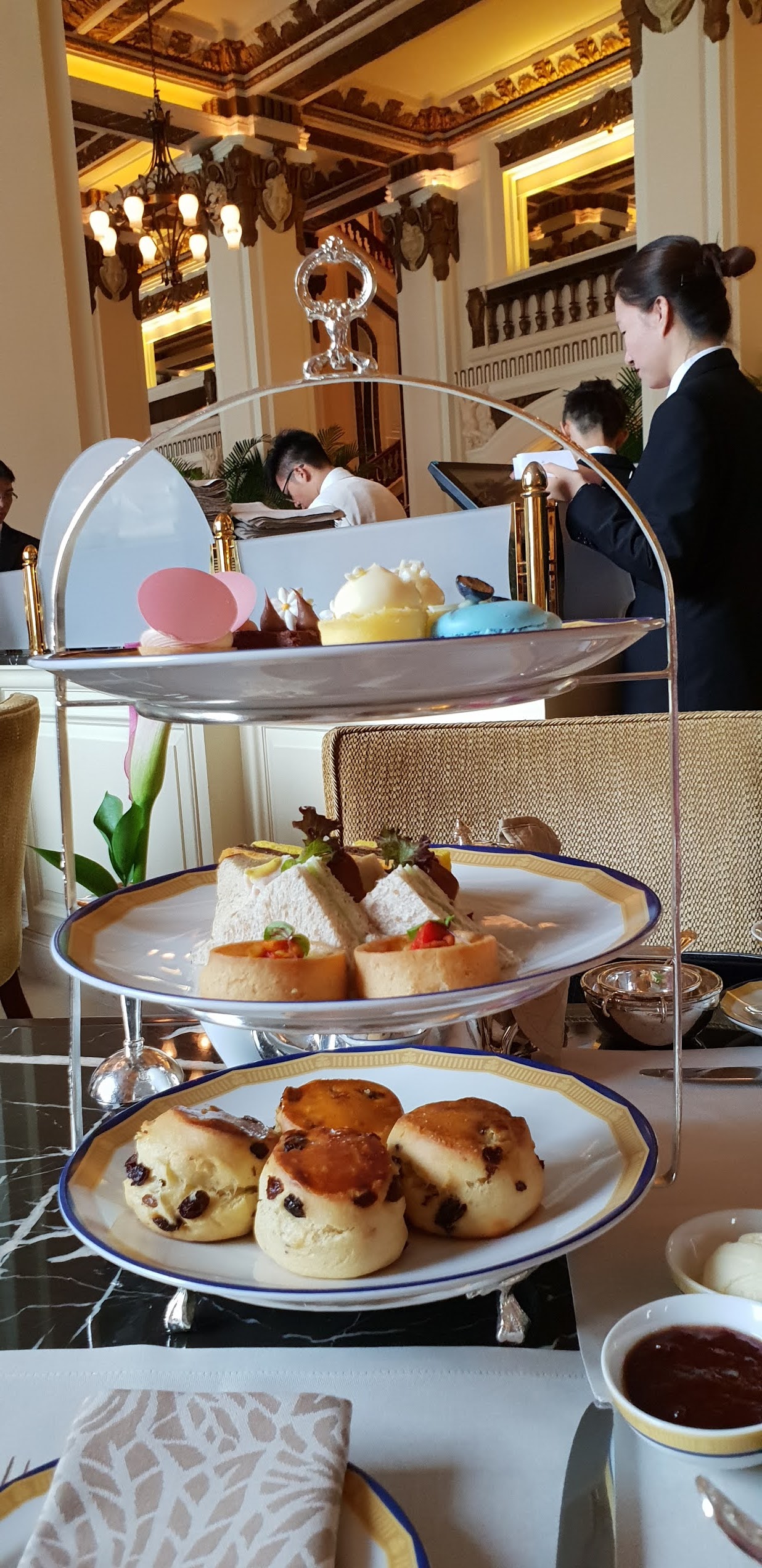
WE went once for lunch, and yes, we had to go to the famous Afternoon Tea, for which you had to book or stand in a very long line.  We booked and discovered preference was given to those who were staying at the hotel.


Out came the silver tea service, and one could imagine that this was the same as what it had been a hundred years ago.  I had tea, after all, it was afternoon tea!


The cakes were interesting, there were quarter sandwiches rather than finger sandwiches, and though I'm not a fan of fruit scones, I'm always up for something different.

After it, it's probably not a good idea to go out for dinner too.

Overall, the experience was worth it.


Wednesday, March 17, 2021

Nepean Country Club, Rosebud, Victoria, Australia

We have a timeshare property we bought a long, long time ago, and it is located at Rosebud, in Victoria, Australia.

At the time we bought it, we thought it would be a good idea to have somewhere to go, to visit and stay for one week of the year.  And for the first few years, we did.

Until we moved to Queensland, and when we did that, we discovered the other convenience of owning a timeshare, we could get reciprocal weeks anywhere in the world.

Mostly in New Zealand, north and south island, but also on the French Riviera.  That was some experience spending a week there.

When we first bought it, it was very small, with only a few apartments, and facilities.  Perhaps the biggest drawcard was the 18 hole golf course, but we didn't play golf.  It had a swimming pool, a restaurant, a cafe, tennis courts, and a bowling green.

Only recently when we returned, to actually stay for a week, we discovered the place to be much larger, a new reception centre, a lot more apartments, and better facilities.

The reception centre was imposing

From any side.  It also had apartments and walkways going off in all directions.  On this side, it led to the restaurant and cafe.

Not far away is the aquatic centre and the cafe.  It has both a hot pool and a cold pool, both undercover.  The weather in Victoria can be quite wet and cold, even in summer.

There are BBQ facilities everywhere.

We did not get to use the swimming pool, but we did get coffee every morning at the cafe.

Tennis courts are both undercover and out in the open.

We did not get the opportunity to use the BBQ.  Instead, we opted for dining at several of the nearby hotels.


And the idea of rowing on the lake did not have any appeal.  I'm sure, on a hot day, the experience would be quite different.


Tuesday, August 25, 2020

Time to review the last 10 days, Shanghai, China

 At least today we are able to sleep in, until 8 o'clock.  I'm not sure that means we are in any way shape or form invigorated, but at least it was not another 5:30 wake up for yet another exhausting day in the field.

After the long leisurely dinner last night, a welcome change from fretting over what we could and could not eat, it seemed the perfect end to a long and, at times, grueling tour.

Not participating in the knock off shopping tour, we stay at the hotel till we have to leave our rooms, then go downstairs and sit in the guest lounge on the ground floor until the bus comes to take us to the airport.

It's a time to summarise the tour.

We have seen China that the Chinese government wanted us to see.  That urban sprawl is a model of urban living in cities that have 7 million or more.  Two we visited had 10 million-plus, Beijing has 24 million and Shanghai has 27 million.

We saw hundreds of kilometers of rice paddies from the train which means their agriculture industry is huge.  What we didn't see was any animals like sheep, cattle, or pigs.  They're out there somewhere but not for us to see.

We saw a lot of power stations, and when you visit the cities you find out why.  Everything is electric.  And for the majority of our visit we do not see much pollution, though as we got closer to Shanghai, there was a lot more haziness.  Luckily on most days, there was a wind that helped clear the air.

The other thing that is very noticeable is the places you are taken to purchase goods that are government-owned factories so allegedly you can buy with confidence that what you're getting is real, not fake and you will get an iron-clad guarantee to that effect.

But it will cost an arm and a leg.  Nothing in any of these so-called factories is cheap.

The Chinese medicine shop, the pills they recommend for everyone are about 400 to 500 dollars Aus for a three month supply, for any type and there can three types so you're instantly looking at over a thousand Australian dollars right there.

At the pearl factory, the cost of everything is more subjective relative to whether or not you want it, but as a guide, it can cost you somewhere between 250 to 1,000 dollars Australian.

At the jade factory, everyone wants a jade bangle for good luck and good fortune, until they see how much it costs.  Here you are considered lucky if you walk away from the place with change from 2,000 dollars Australian.

Next is the terra cotta replica factory, and here there are model soldiers of all sizes and prices, with other pricier goods.  It's possible to escape this place for under 100 dollars Australian.

Lastly there us the silk factory and here for today only, it begins to sound like one of those infomercials on the morning show, the one that makes you turn off the telly or switch over to the  
ABC because anything on there has to be better.

But...

We still buy the sheet the underlay the silk pillowcases and, you guessed it, free pillows were thrown in.  And, yes, it's not steak knives but a suitcase, yes, you heard it right, a suitcase to take it all home in, or free shipping if you spend a million dollars.  Well not quite that much, but it feels like it.

And yet there's more, the tea factory, the tour taken from a single room followed by the sales pitch where we are shocked and amazed by the properties of the tea.  Of course, it's great if I swallow a bottle full of iodine  The tea will just neutralize its effect, but as a tea, well just have to wait and see.

Yes, there are pills too, and these are also very expensive, a six month supply will set you back 1,800 dollars Australian.

So between all of the above, the smaller merchants haven't got a chance because after hitting the big six there's nothing left, or room left in your baggage if you took it with you.

At each venue, the tour guide gives you a long spiel, which is considered to be the softening up process before the real guide for the venue takes over to give the overall lecture on the product, and it's the manufacturing process.

By then, it's simply a matter of telling us the days bargain, but by that time all we want to do is escape, and, for some of us, get the goods and leave.  The dangling of free shipping entices us to buy more than we were going to, but in the end, the ploy works.

The government must be making a small fortune from this inflow of supposedly rich tourists.  Make the tour cheap, guide the tourists to the government factories, and bingo it's win-win for them and the guides who all get a cut of the action.

But...

What about the guides themselves.

Some are really good and some are terrible, and by that, I mean really terrible.  It also depended on their English of which none could speak it without the inevitable conversion issues, and for others, well, it was painful.

We started with one of the best and we finished with one of the best, but each had their tormentors in the English language, and sometimes they struggled to find an English translation. In these cases, it only made the tour all that more enjoyable.

As for the bad guides, it ruined the whole day, as it did for us with the Shaolin temple and kung fu display.  What's worse it was the most expensive and it would have been more preferable to sit in the hotel all day.

There was so much disparity in the meals supplied and the cost.  There was nothing free except for breakfast.  Perhaps the worst was at the Shaolin temple, not so much the food which was quite bland, but in what they gave you to drink.  There was no cold water to drink with it, only hot water, and you had to pay extra for anything else other than water, and it was expensive.

As the most expensive side tour of the itinerary, including all drinks would have made the rest of the day's shortcomings more tolerable.

In contrast, the previous meal we had at the Terra Cotta Soldiers exhibition was incredible and came with all the drinks you could want, and it only cost 60 RMB, or about 13 dollars Aus.  Even the evening dinner in Hutong, an amazing array of Chinese dishes accompanied by free drinks at a higher cost made that from the Temple more disappointing.

Most of us couldn't believe what had happened at the Temple lunch and the guides response when we asked for, at the very least, cold water.  She completely ignored us and pretended it didn't happen.
As I said, there were good guides and terrible guides.  She was terrible. 

But, hang on, the other bus said their guide was worse.

And the Hotels?

God give me patience.

This is where, after the second hotel our group came up with the expression, 'it is what it is'.

All of them looked very impressive from the outside and going into the foyer level that impression improved with all the marble and expensive fittings.

But, sadly, in most cases, that's where the good impression ends.

The few lifts are small and usually fit four people and their cases.  All well and good except when seven buses are using the same hotel, then it can take upwards of half an hour to get you your room.

Which is where shock sets in.

Rooms can be so small you couldn't swing a cat in them, the doors barely getting past the bed end and the distance between the end of the bed and the tv on the wall less than a foot.

Others you don't get a proper bathroom, just a shower, and toilet cubicle and in the passage a washbasin.

Others, you get a large room and a bathroom with a bath and a separate shower.

And something else that I thought was quite odd, very few of the same tour group are allocated rooms on the same floor, so our group of 28 were scattered throughout the hotel on each occasion.

My overall impression, we were using old hotels that are now very tired according to trip advisor,  because discerning visitors are using the better hotels that still don't cost much more than these for a standard room.

Trip a deal could do better if they wanted to.

But as I said, it is what it is and it's not as if you're going to spend the rest of your life in any of those rooms.  Besides isn't that half the fun, finding the completely unexpected,  after all this is China and we cannot expect to find what we're used to here.


Tuesday, August 4, 2020

The Regal Plaza Hotel, Shanghai, China

Well, yet another grandiose exterior, and magnificent marble foyer.  Picture this...


Then, as always, the stars stop dropping off at the lifts, and then finally plunge when you get to the room.

Ours was designed by a blind man.


You open the door and it barely misses the end of the bed, there are two single beds in a room that would probably need an extra six inches if it was a king double.


You try to get past the end of the beds to what looks like an alcove but you walk into the TV, sticking about 8 inches out from the wall.

All in all, it's a very odd setup for a hotel room, but, again, it's not the first hotel we've stayed in where there is a shortage of space between walls and beds.  It was just disappointing that we ended up in a room with twin beds.

The next morning...

After the usual morning routine made somewhat more difficult because our room literally is a sardine can, we head down to breakfast and seize a seat at one of the round tables, one that is as stable as a paper house in an earthquake area.

Unlike the last hotel when there were 200 people trying to fit in a space that took 50, this time we can get breakfast and sit down, even if the table doesn't have cutlery or anything else on it.

There always seems to be a problem but I guess this morning we're using our hands.  But, as it happens somewhere in the room there must be spare knives and forks, other people are using them so we’ll add a little hide and seek to the morning's festivities.

The only thing I've found in China at breakfast time to be a problem is bacon.  They cannot seem to be able to cook it properly.  Perhaps it's the same with fried eggs, they seem to have this idea of cooking the yolk until it's hard.


Tuesday, July 28, 2020

Shanghai, China. A night cruise to the Bund and back


In Shanghai at last, and off to a boat ride at night


There's not enough time to go to the hotel and come back to the wharf, the hotel being about an hour's drive in the opposite direction to the cruise boat so we go to the boat ride parking lot instead, and take a half-hour or so before boarding to get something to eat.

When we finally get back from having a coffee or tea at a non-Starbucks coffee house, we find at least 100 buses all lined up and parked, and literally thousands of Chinese and other Asians streaming through the turnstiles to get on another boat leaving earlier than ours.

Buses were just continually stopping near where we were standing and literally arriving one after the other with people were everywhere in what could only be described as organized chaos.

At that moment, and even later, I was not quite sure what the name of the boat was, but it had 3 decks and VIP rooms and it was huge, with marble staircases.


Who has marble staircases in a boat?

We're going out across the water as far as the Bund and then turn around and come back about 30 to 40 minutes.   Being first on the boat we got the pick of the seats on the second of three levels and by the time everyone was on board, there was no room left on the third level, nor at the end of the second level.  And no one wanted to pay the extra to go into the VIP lounge.

We were sitting by very large windows where it was warm enough watching the steady procession of the colored lights of other vessels, and outside the buildings.


It was quite spectacular, as were some of the other boats going out on the harbour.

All the buildings of the Bund were lit up


And along that part of the Bund was a number of old English style buildings made from sandstone, and very impressive to say the least.

 
On the other side of the harbour were the more modern buildings, including the communications tower, as rather impressive structure.


And, another view of that communications tower:


Then, somewhat tired after a long day, next was the ride to the hotel, about 50 minutes or so, giving us enough time to consider the possibility that this hotel might be better than the last, but knowing full well those hopes were about to be dashed.


Sunday, July 19, 2020

Morning in Hangzhou; the Chinese do it differently

This morning starts off with a bang.

Yes, the question on everybody's lips, how do you fit 200 plus people into a room clearly designed to fit 50 comfortably?

The answer; pure mayhem, and a lot of people missing out on breakfast, or at the very least trying to eat in the awkwardest of positions, by balancing on edges of chairs or just standing at the bar.
This is a zero out of ten for the tour company.

Seven plus tours all leaving at the same time and no possible way of fitting them in.  Good for the hotel if they charged you for breakfast, because at various times there was nothing to eat, and definitely no milk for coffee if you could get coffee.

Still, as we keep saying, it is what it is.

It's rather hit and miss with breakfast, sometimes there's adequate catering, a large enough room, and enough food set out for a very large group all turning up at the same time.

So, after the lucky few who did manage to get a seat and equally something to eat, we all pile into the bus, after having to get our suitcases onto the bus because we're moving on to Shanghai after the day's activities...

...and then have to wait for the other seven to move off.  In the end, we reverse into the traffic and get underway.  I'm not sure what the other buses were going to do.


But, getting out of the hotel car park was only the first part of the morning's adventure, the next part was not exactly going to be any easier.  8:00 in the morning means peak hour traffic, and here peak hour traffic takes on a whole new meaning.

Four or five lanes completely full and at a standstill, and the odd daredevil, including our bus driver, thinking he can change lanes.

Having a window seat can be fraught with danger; you get to see some of the most incredible maneuvers Chinese driver's attempt and amazingly often succeed.

Oh, my mistake, changing lanes can be done.

It just takes a lot of nerve and a death wish.

Thursday, July 9, 2020

The Silk Factory, Suzhou, China


China is renowned for its exquisite silk, so naturally, a visit to the Silk Spinning Factory is part of today's tour.

After that, we will be heading downtown to an unspecified location where we're getting a boat ride, walk through a typical Chinese shopping experience, and coffee at a coffee shop that is doubling as the meeting place, after we soak up the local atmosphere.

The problem with that is that if the entire collective trip a deal tourists take this route then the savvy shopkeepers will jack up their prices tenfold because we're tourists with money.  It'll be interesting to see how expensive everything is.

So...

Before we reach the silk factory, we are told that Suzhou is the main silk area of China, and we will be visiting a nearly 100 years old, Suzhou No 1 Silk Mill, established in 1926.  Suzhou has a 4,700-year history of making silk products.  It is located at No. 94, Nanmen Road, Suzhou, Jiangsu, China.

Then we arrive at the Silk Factory, another government-owned establishment with a castiron guarantee of quality and satisfaction.


The look and feel of the doona cover certainly backs up that claim


And the colors and variety is amazing (as is the cost of those exquisite sets)

We get to see the silk cocoon stretched beyond imagination, and see how the silk thread is extracted, then off to the showroom for the sales pitch.

It isn’t a hard sell, and the sheets, doonas, pillows, and pillowcases, are reasonably priced, and come with their own suitcase (for free) so you can take them with you, or free shipping, by slow boat, if you prefer not to take the goods with you.

We opt for the second choice, as there’s no room left in our baggage after packing the Chinese Medicine.


Sunday, July 5, 2020

The Erqi Memorial Tower and city Centre, Zhengzhou, Henan Province, China


A convoluted explanation on the reasons for this memorial came down to it being about the deaths of those involved in the 1923 Erqi strike, though we're not really sure what the strike was about.

So, after a little research, this is what I found:

The current Erqi Tower was built in 1971 and was, historically, the tallest building in the city.  It is a memorial to the Erqi strike and in memory of Lin Xiangqian and other railway workers who went on strike for their rights, which happened on February 7, 1923.

It has 14 floors and is 63 meters high.  One of the features of this building is the view from the top, accessed by a spiral staircase, or an elevator, when it's working (it was not at the time of our visit).

There seems to be an affinity with the number 27 with this building, in that

- It's the 27th memorial to be built
- to commemorate the 27th workers' strike
- located in the 27th plaza of Zhengzhou City.

We drive to the middle of the city where we once again find traveling in kamikaze traffic more entertaining than the tourist points


When we get to the drop-off spot, it's a 10-minute walk to the center square where the tower is located on one side.  Getting there we had to pass a choke point of blaring music and people hawking goods, each echoing off the opposite wall to the point where it was deafening.  Too much of it would be torture.


But, back to the tower...

It has 14 levels, but no one seemed interested in climbing the 14 or 16 levels to get to the top.  The elevator was broken, and after the great wall episode, most of us are heartily sick of stairs.

The center square was quite large but paved in places with white tiles that oddly reflected the heat rather than absorb it.  In the sun it was very warm.


Around the outside of two-thirds of the square, and crossing the roads, was an elevated walkway, which if you go from the first shops and around to the other end, you finish up, on the ground level, at Starbucks.

This is the Chinese version and once you get past the language barrier, the mixology range of cold fruity drinks are to die for, especially after all that walking.  Mine was a predominantly peach flavor, with some jelly and apricot at the bottom.  I was expecting sliced peaches but I prefer and liked the apricot half.

A drink and fruit together was a surprise.

Then it was the walk back to the meeting point and then into the hotel to use the happy house before rejoining the kamikaze traffic.

We are taken then to the train station for the 2:29 to our next destination, Suzhou, the Venice of the East.


The Henan Museum, Zhengzhou, Henan Province, China

The Henan Museum is one of the oldest museums in China.  In June 1927, General Feng Yuxiang proposed that a museum be built, and it was completed the next year.  n 1961, along with the move of the provincial capital, Henan Museum moved from Kaifeng to Zhengzhou.

It currently holds about 130,000 individual pieces, more of which are mostly cultural relics, bronze vessels of the Shang and Zhou Dynasties, and pottery and porcelain wares of the various dynasties.

Eventually, we arrive at the museum and get off the bus adjacent to a scooter track and despite the efforts of the guide, there's no stopping them from nearly running us over.

We arrive to find the museum has been moved to a different and somewhat smaller building nearby as the existing, and rather distinctively designed, building is being renovated.

While we are waiting for the tickets to enter, we are given another view of industrial life in that there is nothing that resembles proper health and safety on worksites in this country, and the workers are basically standing on what looks to be a flimsy bamboo ladder with nothing to stop them from falling off.

The museum itself has exhibits dating back a few thousand years and consist of bronze and ceramic items.  One of the highlights was a tortoiseshell with reportedly the oldest know writing ever found.

Other than that it was a series of cooking utensils, a table, and ceramic pots, some in very good condition considering their age.


There were also small sculptures


an array of small figures


and a model of a settlement


20 minutes was long enough.

Monday, June 15, 2020

The Glory Grand Hotel, Zhengzhou, China

The Glory Grand hotel

Like all the hotels we're staying in, it has an impressive foyer.  You walk in and you think on appearances it's going to be 5 stars, and not the 3 and a half rating on trip advisor.

Pity then that it all goes downhill from there.

We have a corner room and no bathroom.

Have you ever stayed in a hotel that has rooms with no bathroom?  Yes, it's a first for us too.  Still, this is China and I suspect if you complain there's always a worse room to put you in.

For us, it's just going to be an amusing situation we'd bear and give it a one-star rating on TripAdvisor for the hotel.

And just a word of warning, if you decide to book the hotel directly make sure you don't get a corner room.

At least everything else was reasonably ok.  Ok, not so much, the safe doesn't work.

This doesn't augur well for the rest of the tour in this particular place.

Before we leave, some photos of our room, and the lack of a bathroom.


Separate doors for shower and toilet, and on the other side of the passage, the washbasin


Feng Shui seems to have been forgotten when planning this room.

The next morning we discover that other rooms do have bathrooms but they're small.  Some have neither tissues or toilet paper, another has a faulty power socket and cannot recharge the phone, and I'm sure there are other problems.

All in all, it seemed very odd to have the toilet and shower on one side, and the wash basin on the other side of the passage.

Wednesday, May 27, 2020

From Beijing to X'ian by bullet train.


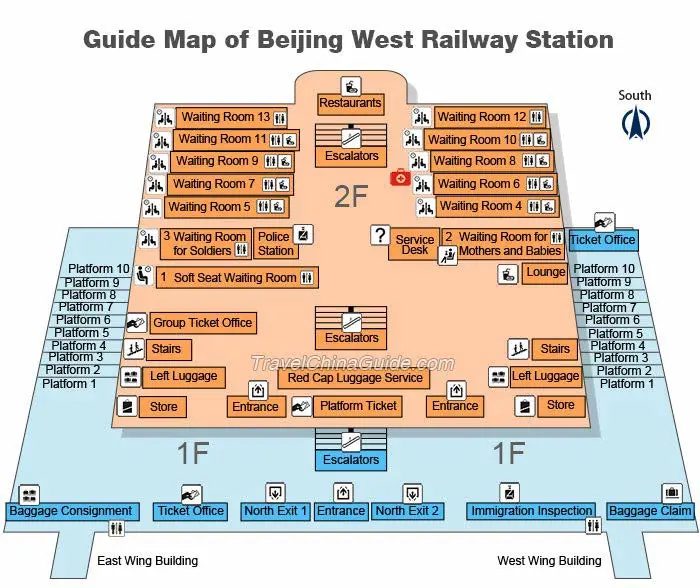
Beijing West train station.

Beijing west railway station is about eight kilometers from the Forbidden City, located at East Lianhuachi Road, Fengtai District.  Most trains traveling between south central, southwest, northwest, and south China are boarded here.

This place is huge and there are so many people here, perhaps the other half of Beijing's population that wasn't in the forbidden city.


Getting into the station looked like it was going to be fraught with danger but the tour guide got us into the right queue and then arranged for a separate scanner for the group to help keep us all together


Then we decided to take the VIP service and got to waiting room no 13, the VIP service waiting room which was full to overflowing.  Everyone today was a VIP.  We got the red hat guy to lead us to a special area away from the crowd.

Actually, it was on the other side of the gate, away from the hoards sitting or standing patiently in the waiting room.  It gave us a chance to get something to eat before the long train ride.

The departure is at 4 pm, the train number was G655, and we were told the trains leave on time.  As it is a high-speed train, stops are far and few between, but we're lucky, this time, in that we don't have to count stations to know where to get off.

We're going to the end of the line.

However, it was interesting to note the stops which, in each case, were brief, and you had to be ready to get off in a hurry.

These stops were Shijiazhuang, Zhengzhou East, Luoyang Longmen, Huashan North, and Weinan North.  At night, you could see the lights of these cities from a distance and were like oases in the middle of a desert.  During the day, the most prominent features were high rise apartment blocks and power stations.


A train ride with a difference

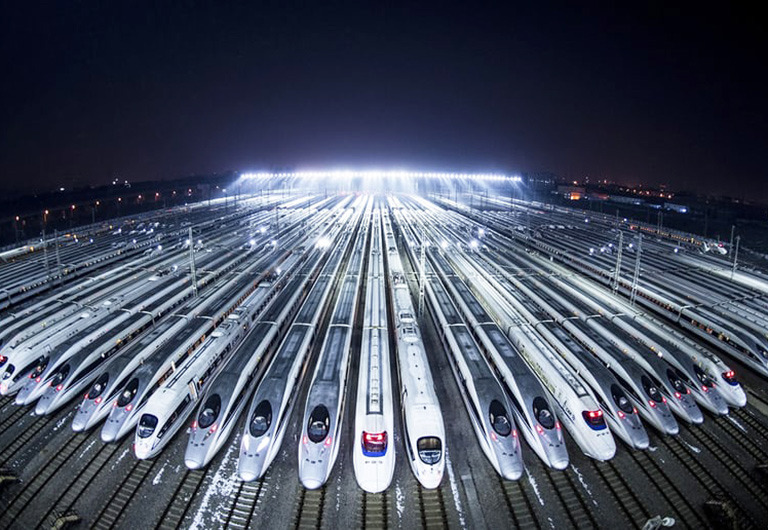
G Trains at Wuhan Railway Station

China's high-speed trains, also known as bullet or fast trains, can reach a top speed of 350 km/h (217 mph).

Over 2,800 pairs of bullet trains numbered by G, D or C run daily connecting over 550 cities in China and covering 33 of the country's 34 provinces. Beijing-Shanghai high-speed train link the two megacities 1,318 km (819 mi) away in just 4.5 hours.

By 2019, China keeps the world's largest high-speed rail (HSR) network with a length totaling over 35,000 km (21,750 mi).

To make the five and a half hours go quicker we keep an eye on the speed which hovers between 290 and 305 kph, and sitting there with our camera waiting for the speed to hit 305 which is a rare occurrence, and then, for 306 and then for 307, which happened when we all took a stroll up to the restaurant car to find there had nothing to eat.

I got a strange flavored drink for 20 yuan.

There was a lady manning a trolley that had some food, and fresh, maybe, fruit on it, and she had a sense of humor if not much English.

We didn't but anything but the barrel of caramel popcorn looked good.

The good thing was, after hovering around 298, and 299 kph, it finally hit 300.


We get to the end of the line, and there is an announcement in Chinese that we don't understand and attempts to find out if it is the last station fall on deaf ears, probably more to do with the language barrier than anything else.

Then, suddenly the train conductor, the lady with the red hat, comes and tells us it is, and we have fifteen minutes, so we're now hurrying to get off.

As the group was are scattered up and down the platform, we all come together and we go down the escalator, and, at the bottom, we see the trip-a-deal flags.


X’ian,and the Xi'an North Railway Station

Xi'an North Railway Station is one of the most important transportation hubs of the Chinese high-speed rail network. It is about 8.7 miles (14 km) from Bell Tower (city center) and is located at the intersection of the Weiyang Road and Wenjing Road in Weiyang District.

This time we have a male guide, Sam, who meets us at the end of the platform after we have disembarked.  We have a few hiccups before we head to the bus.  Some of our travelers are not on his list, but with the other group.  Apparently a trip-a-deal mix-up or miscommunication perhaps.

Then it's another long walk with bags to the bus.  Good thing its a nicely air-conditioned newish bus, and there's water, and beer for 10 yuan.  How could you pass up a tsing tao for that price?

Xi’an is a very brightly lit up city at night with wide roads.  It is very welcoming, and a surprise for a city of 10 million out in the middle of China.

As with all hotels, it's about a 50-minute drive from the railway station and we are all tired by the time we get there.

Tomorrow’s program will be up at 6, on the bus 8.40 and off to the soldiers, 2.00 late lunch, then train station to catch the 4.00 train, that will arrive 2 hours later at the next stop.  A not so late night this time.


The Grand Noble Hotel

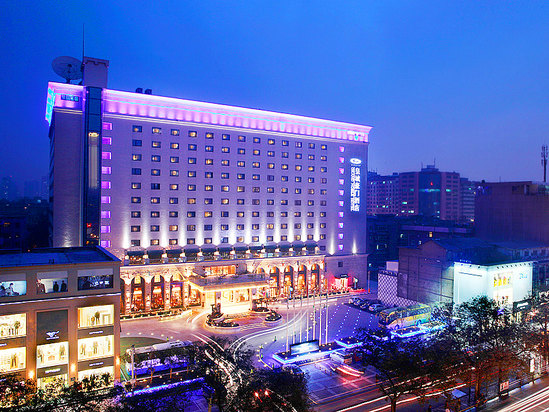
Outdoor scene

Grand Noble Hotel Xi'an is located in the most prosperous business district within the ancient city wall in the center of Xi'an.

The Grand Noble Hotel, like the Friendship Hotel, had a very flash foyer with tons of polished marble.  It sent out warning signals, but when we got to our room, we found it to be absolutely stunning.  More room, a large bathroom, air conditioning the works.

Only one small problem, as in Beijing the lighting is inadequate.  Other than that it's what I would call a five-star hotel.  This one is definitely better than the Friendship Hotel.

In the center of the city, very close to the bell tower, one of the few ancient buildings left in Xi’an.  It is also in the middle of a larger roundabout and had a guard with a machine gun.

Sadly there was no time for city center sightseeing.

Tuesday, May 26, 2020

The Forbidden City, Beijing, China

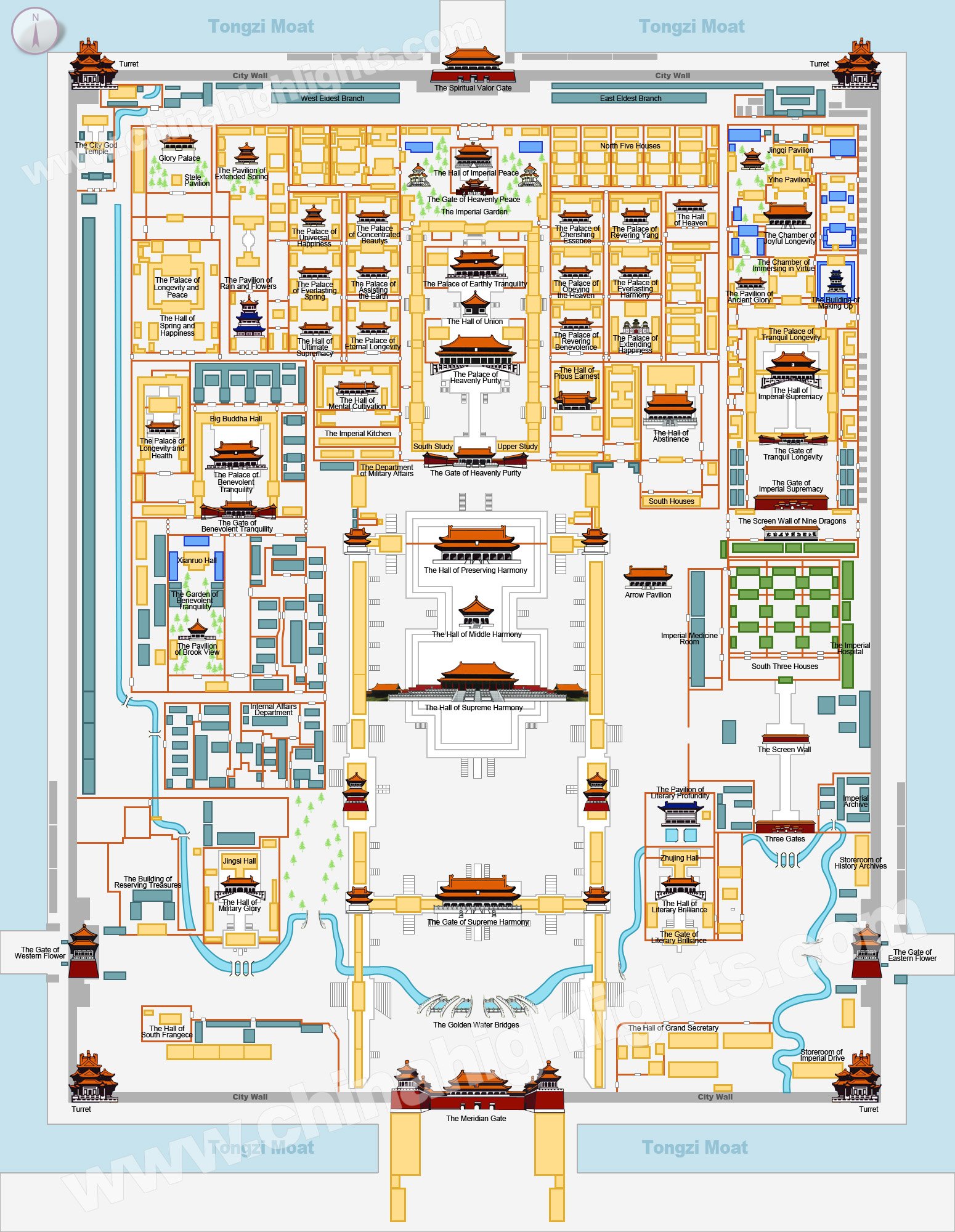
Now we're walking to the Forbidden City, and it seems like we're walking for miles and we're practically exhausted before we get started on the main tour.  I'm not sure if we received a map of the city, but one is certainly needed so that you can navigate the many features, buildings, and walkways.


There are tour groups everywhere in the large courtyard outside the gate, most likely getting a lecture on the last of the Chinese emperors about that time Sun Yat-Sen proclaimed the new China around 1912.  We were no exception, and it was an interesting way to spend the time waiting to get in.  It was a tale of intrigue, interwoven with a 3-year-old emperor, and a scheming concubine who becomes the Emperor's favorite, enough to bear him a son and successor.

Bribery and corruption at its best.

But its history runs something like this:

The Forbidden City is was once the imperial and state residence of the Emperor of China, as well as the center of government, from the Ming Dynasty to the Qing Dynasty, or 1420 to 1924.

It was built from 1406 to 1420 when the Yongle Emperor moved the capital from Nanking to Beijing and consists of about 980 buildings, and 8,886 bays of rooms (not the 9,999 as prescribed in myth) and covers 180 acres.  Over the 14 years, a million workers used whole logs of wood from the jungles of southwestern China, marble from quarries near Beijing, specially made golden bricks from Suzhou


Since 1925 it has been a museum and is the largest number of preserved wooden structures in the world.


The city is surrounded by a wall 7.9 meters high, and a moat that is 6 meters deep and 52 meters wide.  A tower sits at each of the four corners.  Each side has a gate, the north is called the Gate of Divine Might, the south is called the Meridian gate.  East and west are called East Glorious Gate and West Glorious Gate respectively.


But, back in the courtyard, we are ready to go in and follow the tour guide who has switched from her amplified microphone to a whisper device we all wear in our ears.  She talks and we listen.

We all make it through and regroup on the other side. This is where the fun begins because we are about to meet a large percentage of the 80,000, they let for the day.


It seems to me they have all arrived at the same time, although by the time we get to the entrance gate, it is very well organized, bags are scanned, people are scanned, and you're in.  

After crossing one of the seven Golden Water bridges, you begin to get some idea of the size and scope of the City, and in the distance, the first of the buildings, The Gate of Supreme Harmony.  On a hot day, that could be a long and thirsty walk.


From there it is one pagoda after another with buildings that surround the edge of the whole Forbidden City, as does the moat.


By the time we get to the second courtyard, it was time to have ice cream as a refresher.  Others head up to another exhibit, and it's just too many stairs for us.

After this, it's a walkthrough another courtyard, heading up and down some more stairs, we go and see the museum, with priceless relics from past emperors.


There are areas like the outer courtyard, the inner courtyard, yet another courtyard, and the gardens where the concubines walked and spent their leisure time.  It is not far from the emperor's wives living quarters, though there's precious little left of the furniture, other than a settee and two rather priceless so-called Ming dynasty vases.

We get into the bad habit of calling all of the vases Ming dynasties.  Above is one of the inner courtyards there were living quarters, and that tree is over 300 years old.


Out through some more alleyways and through an entrance that led to the area where the concubines lived, very spacious, bright, and filled with trees, plants, and walkways through rocky outcrops.


The whole area was made up of living quarters and waterways, rocks and paths, all very neatly set out, and it looked to be a very good place to live.


This is an example of the living quarters, overlooking the gardens

 And there were several pagodas


From there its a quick exit out the northern entrance, and another longish walk to our bus, which arrives at the meeting point shortly after we do.


That done, the Beijing tour guide has completed her section of our China experience, and we're ready to move onto the next, but not before getting onto the high-speed train and head for X'ian.

And a new tour guide by the name of Sam.