Tuesday, October 15, 2019

A trip to China - Day 11 - Rest at last, time to take stock

Day 11 - The last day in China

At least today we are able to sleep in, until 8 o'clock.  I'm not sure that means we are in any way shape or form invigorated, but at least it was not another 5:30 wake up for yet another exhausting day in the field.

After the long leisurely dinner last night, a welcome change from fretting over what we could and could not eat, it seemed the perfect end to a long and, at times, gruelling tour.

Not participating in the knock off shopping tour, we stay at the hotel till we have to leave our rooms, then go downstairs and sit in the guest lounge on the ground floor until the bus comes to take us to the airport.

It's a time to summarise the tour.

We have seen China that the Chinese government wanted us to see.  That urban sprawl is a model of urban living in cities that have 7 million or more.  Two we visited had 10 million-plus, Beijing has 24 million and Shanghai has 27 million.

We saw hundreds of kilometres of rice paddies from the train which means their agriculture industry is huge.  What we didn't see was any animals like sheep, cattle or pigs.  They're out there somewhere but not for us to see.

We saw a lot of power stations, and when you visit the cities you find out why.  Everything is electric.  And for the majority of our visit we do not see much pollution, though as we got closer to Shanghai, there was a lot more haziness.  Luckily on most days, there was a wind which helped clear the air.

The other thing that is very noticeable is the places you are taken to purchase goods that are government-owned factories so allegedly you can buy with confidence that what you're getting is real, not fake and you will get an iron-clad guarantee to that effect.

But it will cost an arm and a leg.  Nothing in any of these so-called factories is cheap.

The Chinese medicine shop, the pills they recommend for everyone are about 400 to 500 dollars Aus for a three month supply, for any type and there can three types so you're instantly looking at over a thousand Australian dollars right there.

At the pearl factory, the cost of everything is more subjective relative to whether or not you want it, but as a guide, it can cost you somewhere between 250 to 1,000 dollars Australian.

At the jade factory, everyone wants a jade bangle for good luck and good fortune, until they see how much it costs.  Here you are considered lucky if you walk away from the place with change from 2,000 dollars Australian.

Next is the terra cotta replica factory, and here there are model soldiers of all sizes and prices, with other more pricier goods.  It's possible to escape this place for under 100 dollars Australian.

Lastly there us the silk factory and here for today only, it begins to sound like one of those infomercials on the morning show, the one that makes you turn off the telly or switch over to the 
ABC because anything on there has to be better.

But...

We still buy the sheet the underlay the silk pillowcases and, you guessed it, free pillows were thrown in.  And, yes, it's not steak knives but a suitcase, yes, you heard it right, a suitcase to take it all home in, or free shipping if you spend a million dollars.  Well not quite that much, but it feels like it.

And yet there's more, the tea factory, the tour taken from a single room followed by the sales pitch where we are shocked and amazed by the properties of the tea.  Of course, it's great if I swallow a bottle full of iodine  The tea will just neutralise its effect, but as a tea, well just have to wait and see.

Yes, there are pills too, and these are also very expensive, a six month supply will set you back 1,800 dollars Australian.

So between all of the above, the smaller merchants haven't got a chance because after hitting the big six there's nothing left, or room left in your baggage if you took it with you.

At each venue, the tour guide gives you a long spiel, what is considered to be the softening up process before the real guide for the venue takes over to give the overall lecture on the product, and it's the manufacturing process.

By then, it's simply a matter of telling us the days bargain, but by that time all we want to do is escape, and, for some of us, get the goods and leave.  The dangling of free shipping entices us to buy more than we were going to, but in the end, the ploy works.

The government must be making a small fortune from this inflow of supposedly rich tourists.  Make the tour cheap, guide the tourists to the government factories and bingo it's win-win for them and the guides who all get a cut of the action.

But...

What about the guides themselves.

Some are really good and some are terrible, and by that, I mean really terrible.  It also depended on their English of which none could speak it without the inevitable conversion issues, and for others, well, it was painful.

We started with one of the best and we finished with one of the best, but each had their tormentors in the English language and sometimes they struggled to find an English translation. In these cases, it only made the tour all that more enjoyable.

As for the bad guides, it ruined the whole day, as it did for us with the Shaolin temple and kung fu display.  What's worse it was the most expensive and it would have been more preferable to sit in the hotel all day.

There was so much disparity in the meals supplied and the cost.  There was nothing free except for breakfast.  Perhaps the worst was at the Shaolin temple, not so much the food which was quite bland, but in what they gave you to drink.  There was no cold water to drink with it, only hot water, and you had to pay extra for anything else other than water, and it was expensive.

As the most expensive side tour of the itinerary, including all drinks would have made the rest of the day's shortcomings more tolerable.

In contrast, the previous meal we had at the Terra Cotta Soldiers exhibition was incredible and came with all the drinks you could want, and it only cost 60 RMB, or about 13 dollars Aus.  Even the evening dinner in Hutong, an amazing array of Chinese dishes accompanied by free drinks at a higher cost made that from the Temple more disappointing.

Most of us couldn't believe what had happened at the Temple lunch and the guides response when we asked for, at the very least, cold water.  She completely ignored us and pretended it didn't happen.
As I said, there were good guides and terrible guides.  She was terrible. 

But, hang on, the other bus said their guide was worse.

And the Hotels?

God give me patience.

This is where, after the second hotel our group came up with the expression, 'it is what it is'.

All of them looked very impressive from the outside and going into the foyer level that impression improved with all the marble and expensive fittings.

But, sadly, in most cases, that's where the good impression ends.

The few lifts are small and usually fit four people and their cases.  All well and good except when seven buses are using the same hotel, then it can take upwards of half an hour to get you your room.

Which is where shock sets in.

Rooms can be so small you couldn't swing a cat in them, the doors barely getting past the bed end and the distance between the end of the bed and the tv on the wall less than a foot.

Others you don't get a proper bathroom, just a shower and toilet cubicle and in the passage a washbasin.

Others, you get a large room and a bathroom with a bath and separate shower.

And something else that I thought was quite odd, very few of the same tour group are allocated rooms on the same floor, so our group of 28 were scattered throughout the hotel on each occasion.

My overall impression, we were using old hotels that are now very tired according to trip advisor,  because discerning visitors are using the better hotels that still don't cost much more than these for a standard room.

Trip a deal could do better if they wanted to.

But as I said, it is what it is and it's not as if you're going to spend the rest of your life in any of those rooms.  Besides isn't that half the fun, finding the completely unexpected,  after all this is China and we cannot expect to find what we're used to here.


Monday, September 30, 2019

A trip to China - Day 10 - A day in Shanghai, sort of - The Yu Gardens


The Yu Gardens


These gardens house a lot of buildings that seemed to be a perfect blend of the old and the new, and if it was up to me, I’d keep the old.  Both the building and the gardens they are set in are like an oasis in the middle of an industrial complex, and perhaps impractical for the number of people living in Shanghai.


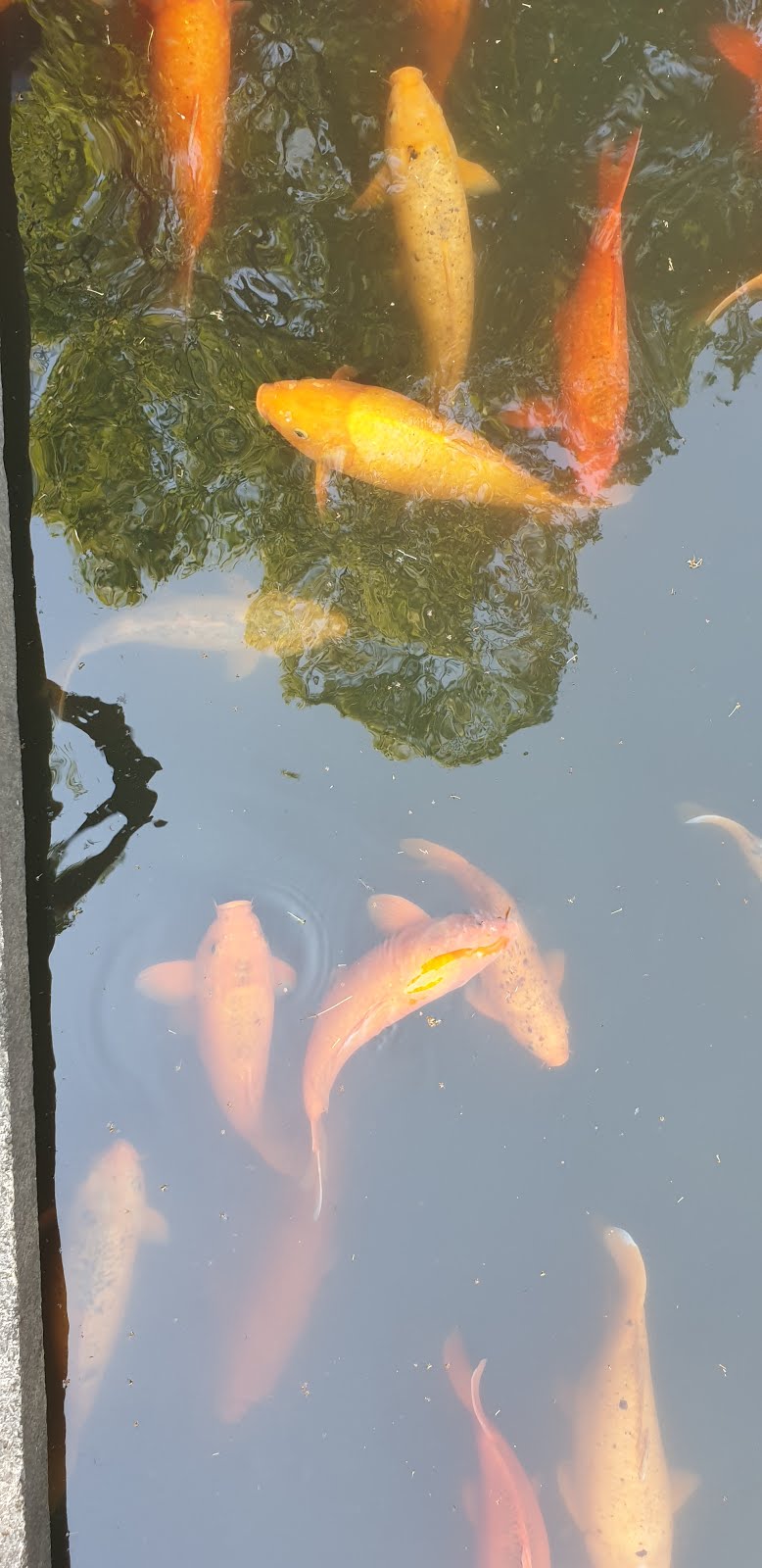
All of the ponds had a lot of fish in them


It was a pleasant afternoon, for both a stroll through the gardens


In and out of the rockery on narrow pathways


And to look inside the buildings that were sparsely furnished


There was even an area set aside for entertainment.


Friday, September 27, 2019

A trip to China - Day 10 - A day in Shanghai, sort of - Lunch, and Old Shanghai


The French Quarter and shake shack 

If you're expecting a whole range of French restaurants forget it.  It's simply a collection of restaurants selling various types of food, and little else.

There is a shopping mall, further away from where the restaurants supposedly are, but there's little interest in finding them.  The happy house is far more important.

We settle, back in the French Quarter, in a place called the shake shack, which I originally thought was the snake shack.  On closer inspection, and after being handed a menu, we discover it's a hamburger place.

Is it like McDonald's, no.  The burger meat is real and the whole hamburger is absolutely delicious.  So are the fries, which are smallish well-cooked crinkle cut chips.

I had ice tea, which was real ice tea, not the sugary concoction you find in bottles, and the lemonade was real as well.

Value for money?  The prices were a little steep but, in my opinion, yes.  I'd go back again if I knew how to get there.


Old Shanghai

I'm not sure I'd go as far as to say this is in reality old Shanghai, but a true representation of it architecturally, yes it is.  The houses, which are shops, are set out symmetrically, with owners, alleyways and squares which may prove that it was specially built for the tourists.


Anyway...

The buildings are magnificent, and a photographers delight, and you'd finish up having hundreds of photos by the time you leave.


As for buying stuff, remember if you're not Chinese you have the sucker tourist stamp on your forehead, so be prepared to walk away if the vendors will not bargain.  Nothing here is worth the price tag and in our group discounts like from 130 RMB to 50 RMB and from 1 for 1,200 to 2 for 950 RMB are common.

Here common t-shirts that we can get for 3 dollars back home start at 150 RMB which is roughly 35 dollars.  It's that kind of market.

We end up is a tea room, on the third floor of the meeting point below, and discover all the tour guides sitting around a table counting money.  It is we were told where they discussed 'strategy'.


Thursday, September 26, 2019

A trip to China - Day 10 - A day in Shanghai, sort of - The Bund


The Bund

This was from the land side, after having seen it at night with all the lights, this time it was during the day, and particularly interesting in that the colonial architecture was really fascinating considering their location, but not surprising give Shanghai's history.


The Bund waterfront is about two kilometres long and impossible to cover in the time allowed for this part of the tour.


There was just enough time to get photos of the waterfront and the old buildings.


Some of these buildings had odd shapes, like one on the far right that looks like a bottle opener.


And, for some odd reason, a bull.


On the other side of the water, the sights that had been quite colourful the night before, were equally impressive though somewhat diminished by the haze.


Wednesday, September 25, 2019

A trip to China - Day 10 - A day in Shanghai, sort of - The Maglev Train

After the usual morning routine made somewhat more difficult because our room literally is a sardine can, we head down to breakfast and seize a seat at one of the round tables, one that is as stable as a paper house in an earthquake area.

Unlike yesterday when there were 200 people trying to fit in a space that took 50, this time we can get breakfast and sit down, even if the table doesn't have cutlery or anything else on it.

There always seems to be a problem but I guess this morning we're using our hands.  But, as it happens somewhere in the room there must be spare knives and forks, other people are using them so we’ll add a little hide and seek to the morning's festivities.

The only thing I've found in China at breakfast time to be a problem is bacon.  They cannot seem to be able to cook it properly.  Perhaps it's the same with fried eggs, they seem to have this idea of cooking the yolk until it's hard.

Oh, well, it could be worse.

The Maglev Magnetic train

From the brochure:

This morning, step back in time at the Shanghai Museum - home to more than 120,000 objects and artworks. Enjoy some free time at leisure this afternoon or join an optional half-day tour of Shanghai (not included) including Yu Garden, believed to have been built in the Ming Dynasty, more than 400 years ago. The exquisite layout, beautiful scenery, and the artistic style of the garden architecture have made the garden one of the highlights of Shanghai. Other attractions include Xintiandi, Old Town and Nanjing Road.

We'll see what happens, but it's interesting that the magnetic train didn't get a mention.

So, the first treat for the day is the high-speed magnetic train, something we only learned about after arriving in China and was not on any of the pre-tour documentation.

But first we have to drive to the station and because we are leaving at 8, its peak hour traffic, and it takes 1 hour 10 minutes to get there.

The train also has a practical use and that is to take passengers from Shanghai to Pudong international airport as well as for those train enthusiasts, which is what we are.

On the train, it has the same sleek look as the bullet trains, but it is completely different, and you are able to see from the front of the train to the back.


Reputed to travel at 431 kph we take a seat and it is not long before the doors shut, and a loud humming noise is soon replaced by what sounds like an engine, then we start moving.  It sounds just like a normal train, and is a lot noisier than a normal bullet train.


Seating on the train was nothing special, as one might expect


It didn't take long before it hits the advertised speed of 431 kph.  This is not sustained for very long, because the distance is on 40 odd kilometres, and the whole trip takes about 7 minutes.


We go to the airport, and then we come back.  Is it worth the price, yes.  If you are a train enthusiast.


Wednesday, September 4, 2019

A trip to China - Day 9 - A night cruise in Shanghai, and then to the hotel


In Shanghai at last, and off to a boat ride at night


There's not enough time to go to the hotel, probably an hour out of the city in the opposite direction to the boat so we go to the boat ride parking lot instead.

When we finally get back from having a coffee or tea at a non-Starbucks coffee house, we find at least 100 buses all lined up and parked, and literally thousands of Chinese and other Asians streaming through the turnstiles to get on another boat leaving earlier than ours.

Buses were just continually stopping near where we were standing and literally arriving one after the other with people were everywhere in what could only be described as organised chaos.

At that moment, and even later, I was not quite sure what the name of the boat was, but it had 3 decks and VIP rooms and it was huge, with marble staircases.


Who has marble staircases in a boat?

We're going out across the water as far as the Bund and then turn around and come back about 30 to 40 minutes.   Being first on the boat we got the pick of the seats on the second of three levels and by the time everyone was on board, there was no room left on the third level, nor at the end of the second level.  And no one wanted to pay the extra to go into the VIP lounge.

We were sitting by very large windows where it was warm enough watching the steady procession of the coloured lights of other vessels, and outside the buildings.


It was quite spectacular, as were some of the other boats going out on the harbour.

All the buildings of the Bund were lit up


And along that part of the Bund was a number of old English style buildings made from sandstone, and very impressive to say the least.


On the other side of the harbour were the more modern buildings, including the communications tower, as rather impressive structure.


And, another view of that communications tower:


Then, somewhat tired after a long day, next was the ride to the hotel, about 50 minutes or so, giving us enough time to consider the possibility that this hotel might be better than the last, but knowing full well those hopes were about to be dashed.


The Regal Plaza Hotel


Well, yet another grandiose exterior, and magnificent marble foyer.  Then, as always, the stars stop dropping off at the lifts, and then finally plunge when you get to the room.

Ours was designed by a blind man.

Picture this...

You open the door and it barely misses the end of the bed, there are two single beds in a room that would probably need an extra six inches if it was a king double.  You try to get past the end of the beds to what looks like an alcove but you walk into the TV, sticking about 8 inches out from the wall.
All in all, it's a bit of a disaster, but, again, it could be worse.

Just try complaining to the front desk.  That I'm sure would result in a visit to the nearest police station, and quite possibly an attitude readjustment.

This is, after all, China.


Monday, September 2, 2019

A trip to China - Day 9 - The bus to Shanghai, with a happy house stop

Bus to Shanghai

From the brochure: Next, drive to Shanghai (approx. 2 hours) to visit the famous Bund. Shanghai is divided by the Huang Pu River into eastern and western sections. Modern mega high rises are seen on the eastern side while traditional European style architecture may be seen on the western side. The Bund is a five-block riverfront promenade with many of Shanghai's banks and trading houses.

We didn't do any of that, our guide deciding to change the order in which we would visit the various attractions in Shanghai.

We now have a 2 to 3-hour drive depending on traffic, to Shanghai with a happy house stop after 2 hours, which turned out to be a petrol station and a lot of little food places and a mini-mart.

Along the way I managed to get a photo of the fast train, a feat in itself considering the speed it was travelling:


We get a drink and bananas.

Of course, there were a lot of local products, some of which seems a little odd


I'm not sure what anyone would make of these, or some of the offerings inside the mall attached to the petrol station, but a lot of people declined the 'fast food' and piled into the grocery store, which was about the same as a Seven-Eleven store to stock up on items that might not affect their health.

I bought some very interesting drinks, or so my Chinese to English phone translator told me.