Showing posts with label Scenery. Show all posts

Tuesday, August 18, 2020

The Yu Gardens, Shanghai, China

The Yu Gardens or Yuyuan Gardens

The Yu Gardens (or Yuyuan Gardens) are located at No. 137, Anren Street, Huangpu District, very close to the Old City God Temple, in the northeast of the Old City of Shanghai at Huangpu.

Yu Garden was first built in 1559 during the Ming Dynasty by Pan Yunduan and finished approximately 1577, created specifically as a private garden of the Pan family for Pan Yunduan’s parents to enjoy in their old age.

Yu Garden occupies an area of 5 acres, and is divided into six general areas:

  -Sansui Hall which includes the Grand Rockery was originally used to entertain guests,

  -Wanhua Chamber is a delicate building surrounded by derious cloisters,

  -Dianchun Hall, built in 1820, includes Treasury Hall and the Hall of Harmony,

  -Huijing Hall which includes Jade Water Corridor.

  -Yuhua Hall which is furnished with rosewood pieces from the Ming Dynasty, and,

  -The Inner Garden with rockeries, ponds, pavilions, and towers; first laid out in 1709.  As the quietest part of Yu Gardens, it includes the Hall of Serenity and the Acting and Singing Stage.

The Mid-Lake Pavilion Teahouse, within the gardens, is the oldest teahouse in Shanghai.

A centerpiece of the gardens is the Exquisite Jade Rock, a 5-ton boulder that was originally meant for the Huizong Emperor (Northern Song Dynasty from 1100-1126 AD) but was salvaged from the Huangpu River after the boat carrying it had sunk.


These gardens house a lot of buildings that seemed to be a perfect blend of the old and the new, and if it was up to me, I’d keep the old.  Both the building and the gardens they are set in are like an oasis in the middle of an industrial complex, and perhaps impractical for the number of people living in Shanghai.


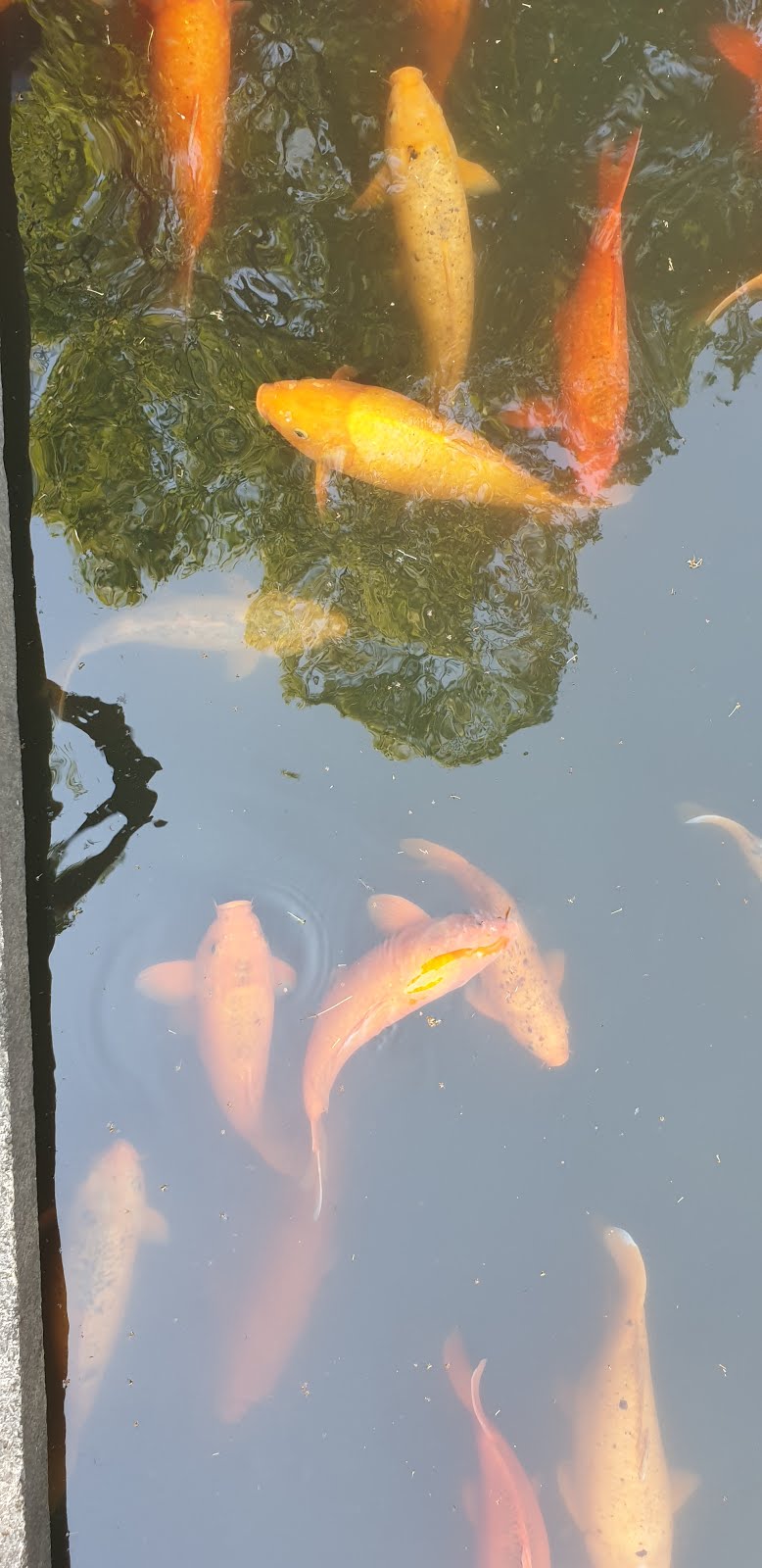
All of the ponds had a lot of fish in them
 

It was a pleasant afternoon, for both a stroll through the gardens


In and out of the rockery on narrow pathways


And to look inside the buildings that were sparsely furnished


There was even an area set aside for entertainment.


Old Shanghai, Shanghai, China

The old Shanghai refers to a small area of Shanghai that used to be walled in and remained that way until about 1912 when all but a small section of the wall was demolished.  With the advent of the concessions, Old Shanghai became the administrative center until later when it became a shopping complex.

Now it has many restored historical buildings as well as new buildings in a somewhat traditional style that has become one of Shanghai's main tourist attractions, housing many shops and restaurants.

The "Old Town" is not exclusively old, as you still have a chance to take in the atmosphere if you wander into the quaint side streets.

But, on first viewing walking down the street towards the complex, I'm not sure I'd go as far as to say this is in reality old Shanghai, except for what appears to be a true representation of it architecturally. 

The buildings, which are shops and restaurants, are set out symmetrically, with streets, alleyways, and squares which may prove that it was specially built for the tourists, and no mechanized traffic.


Anyway...

The buildings are magnificent, and a photographer's delight, and you'd finish up having hundreds of photos by the time you leave.  All the buildings are exquisite representations of traditional Chinese architecture. 


As for buying stuff, remember if you're not Chinese you have the sucker tourist stamp on your forehead, so be prepared to walk away if the vendors will not bargain.  

Nothing here is worth the price tag and in our group discounts like from 130 RMB to 50 RMB and from 1 for 1,200 to 2 for 950 RMB are common.

Here common t-shirts that we can get for 3 dollars back home start at 150 RMB which is roughly 35 dollars.  It's that kind of market.

We end up is a tea room, on the third floor of the meeting point below, and discover all the tour guides sitting around a table counting money, and I have to say it's the most $50 notes I've ever seen in one place.  

It is, we were told, where they discussed 'strategy'.

Friday, August 14, 2020

The French Quarter, Shanghai, China

The French Quarter and Shake Shack 

The Shanghai French Concession was a foreign concession in Shanghai, China from 1849 until 1943 and came to an end in 1943.  It was established on 6 April 1849, when the French Consul to Shanghai obtained a proclamation that conceded certain territory for a French settlement.

The area covered by the former French Concession remained the premier residential and retail district of Shanghai.

The French Quarter is an area west of the Bund, about 8km long comprising a number of small streets and is a highly desired area for non-Chinese to live.  Wukang Lu is a beautiful street, quaint and pretty, with outdoor cafes sprinkled here and there.  While on Wukang Lu, you wouldn't want to miss checking out Ferguson Lane on 376 Wukang Lu.  It is a charming pedestrian space with outdoor restaurants and wine bars.

If you're expecting a whole range of French restaurants forget it.  It's simply a collection of restaurants selling various types of food, and little else.

There is a shopping mall, further away from where the restaurants supposedly are, but there's little interest in finding them.  The happy house is far more important.

We settle, back in the French Quarter, in a place called the Shake Shack, located at No.10 Xintiandi North Block, Lane 181 Taicang Road, Huangpu District Xintindi 10-12 North Block, Shanghai, China.

I originally thought was the Snake Shack.  On closer inspection, and after being handed a menu, we discover it's a hamburger place.  Below is an idea of some of what the restaurant serves:

shakeshack

Is it like McDonald's, no.  The burger meat is real and the whole hamburger is absolutely delicious.  So are the fries, which are smallish well-cooked crinkle cut chips.

I had ice tea, which was real ice tea, not the sugary concoction you find in bottles, and the lemonade was real as well.

Value for money?  The prices were a little steep but, in my opinion, yes.  I'd go back again if I knew how to get there.


Tuesday, July 28, 2020

Shanghai, China. A night cruise to the Bund and back


In Shanghai at last, and off to a boat ride at night


There's not enough time to go to the hotel and come back to the wharf, the hotel being about an hour's drive in the opposite direction to the cruise boat so we go to the boat ride parking lot instead, and take a half-hour or so before boarding to get something to eat.

When we finally get back from having a coffee or tea at a non-Starbucks coffee house, we find at least 100 buses all lined up and parked, and literally thousands of Chinese and other Asians streaming through the turnstiles to get on another boat leaving earlier than ours.

Buses were just continually stopping near where we were standing and literally arriving one after the other with people were everywhere in what could only be described as organized chaos.

At that moment, and even later, I was not quite sure what the name of the boat was, but it had 3 decks and VIP rooms and it was huge, with marble staircases.


Who has marble staircases in a boat?

We're going out across the water as far as the Bund and then turn around and come back about 30 to 40 minutes.   Being first on the boat we got the pick of the seats on the second of three levels and by the time everyone was on board, there was no room left on the third level, nor at the end of the second level.  And no one wanted to pay the extra to go into the VIP lounge.

We were sitting by very large windows where it was warm enough watching the steady procession of the colored lights of other vessels, and outside the buildings.


It was quite spectacular, as were some of the other boats going out on the harbour.

All the buildings of the Bund were lit up


And along that part of the Bund was a number of old English style buildings made from sandstone, and very impressive to say the least.

 
On the other side of the harbour were the more modern buildings, including the communications tower, as rather impressive structure.


And, another view of that communications tower:


Then, somewhat tired after a long day, next was the ride to the hotel, about 50 minutes or so, giving us enough time to consider the possibility that this hotel might be better than the last, but knowing full well those hopes were about to be dashed.


From Hangzhou to Shanghai, China.

Onwards, to Shanghai

From the brochure: Next, drive to Shanghai (approx. 2 hours) to visit the famous Bund. Shanghai is divided by the Huang Pu River into eastern and western sections. Modern mega high rises are seen on the eastern side while traditional European style architecture may be seen on the western side. The Bund is a five-block riverfront promenade with many of Shanghai's banks and trading houses.

We didn't do any of that, our guide deciding to change the order in which we would visit the various attractions in Shanghai.

We now have a 2 to 3-hour drive depending on traffic, to Shanghai with a happy house stop after 2 hours, which turned out to be a petrol station and a lot of little food places and a mini-mart.

Along the way I managed to get a photo of the fast train, a feat in itself considering the speed it was traveling:


We get a drink and bananas.

Of course, there were a lot of local products, some of which seems a little odd


I'm not sure what anyone would make of these, or some of the offerings inside the mall attached to the petrol station, but a lot of people declined the 'fast food' and piled into the grocery store, which was about the same as a Seven-Eleven store to stock up on items that might not affect their health.

I bought some very interesting drinks, or so my Chinese to English phone translator told me.

Monday, July 27, 2020

West Lake, Hangzhou, China. The gardens, and a cruise on the lake.

Next is our visit to the West Lake and surrounding gardens

West Lake is a freshwater lake in Hangzhou, China. It is divided into five sections by three causeways. There are numerous temples, pagodas, gardens, and artificial islands within the lake.

Measuring 3.2 kilometers (2 miles) in length, 2.8 kilometers (1.7 miles) in width, and 2.3 meters (7.5 feet) in average depth, the lake spreads itself in an area totaling 6.5 square kilometers (2.5 square miles).

The earliest recorded name for West Lake was the "Wu Forest River", but over time it changed to two distinct names.  One is "Qiantang Lake", due to the fact that Hangzhou was called "Qiantang" in ancient times.  The other, "West Lake", due to the lake being west of the city


It's about to get busy, with a number of activities planned, and the warmth of the day is starting to make an impact.

The tour starts in the car park about a kilometer away, but the moment we left the car park we were getting a taste of the park walking along a tree-lined avenue.


When we cross the road, once again dicing with death with the silent assassins on motor scooters.


We are in the park proper, and it is magnificent, with flowers, mostly at the start hydrangeas and then any number of other trees and shrubs, some carved into other flower shapes like a lotus.


Then there was the lake and the backdrop of bridges and walkways.

.

And if you can tune out the background white noise the place would be great for serenity and relaxation.


That, in fact, was how the boat ride panned out, about half an hour or more gliding across the lake in an almost silent boat, by an open window, with the air and the majestic scenery.


No, not that boat, which would be great to have lunch on while cruising, but the boat below:


Not quite in the same class, but all the same, very easy to tune out and soak it in.


It was peaceful, amazingly quiet, on a summery day


A pagoda in the hazy distance, an island we were about to circumnavigate.

Of all the legends, the most touching one is the love story between Bai Suzhen and Xu Xi'an. Bai Suzhen was a white snake spirit and Xu Xi'an was a mortal man.

They fell in love when they first met on a boat on the West Lake, and got married very soon after.

However, the evil monk Fa Hai attempted to separate the couple by imprisoning Xu Xi'an. Bai Suzhen fought against Fa Hai and tried her best to rescue her husband, but she failed and was imprisoned under the Leifeng Pagoda by the lake.

Years later the couple was rescued by Xiao Qing, the sister of Baisuzhen, and from then on, Bai Suzhen and Xu Xi'an lived together happily.

The retelling of the story varied between tour guides, and on the cruise boat, we had two.  Our guide kept to the legend, the other tour guide had a different ending.

Suffice to say it had relevance to the two pagodas on the far side of the lake.


There was a cafe or restaurant on the island, but that was not our lunch destination.


Nor were the buildings further along from where we disembarked.

All in all the whole cruise took about 45 minutes and was an interesting break from the hectic nature of the tour.

Oh yes, and the boat captain had postcards for sale.  We didn’t buy any.
 

Lunch


At the disembarkation point there was a mall that sold souvenirs and had a few ‘fast food’ shops, and a KFC, not exactly what we came to China for, but it seemed like the only place in town a food cautious Australian could eat at.


And when tried to get in the door, that's where at least 3 busloads were, if they were not in the local Starbucks.  Apparently, these were the places of first choice wherever we went.

The chicken supply by the time we got to the head of the line amounted to pieces at 22.5 RMB a piece and nuggets.  Everything else had run out, and for me, there were only 5 pieces left.  Good thing there were chips.

And Starbucks with coffee and cheesecake.

At least the setting for what could have been a picnic lunch was idyllic.


Tuesday, July 21, 2020

Meijiawu Tea Village (Longjing Tea Plantation), Hangzhou, China

The Tea House at Meijiawu Tea Village

Our destination is about 10 kilometers (6 miles) from downtown Hangzhou.

Meijiawu Tea Village is located in the west of the world-known West Lake and hailed as "ten miles Meiwu" for its vast area along the Meiling Road, is an ancient village with a history of 600 years.  It is the main production base and a protected area of the fragrant West Lake Dragon Well Tea.


The tea leaves from Meijiawu are beautiful in green color, graceful in shape, strong in fragrance and rich in flavor.


So, first, we get to look at the tea bushes, which are much larger than the bushes we've seen on the side of the road.  I'm not up for becoming a tea picker any time soon, so I'll leave it to the professionals.


All tea leaves are picked by women.  It takes about 8 hours to pick two kilos of leaves.


Tea leaves are still picked by hand three times a year, the first spring, by young girls about 15 or 16, the second, summer tea, picked by girls about 20 years old, and the autumn tea, called grandma tea, picked by older women.

Next, we go to the drying demonstration, three tubs with tea leaves, that have to be stirred by hand for a number of hours.


We then get the sales pitch, which extols the benefits of the green tea, which apparently good for everything.  So, now we have tea and supplement pills.


The teapot fountain in the gardens is a nice touch.

Still, we had a cup or two of tea discovered the right way to make it and had a stroll about the grounds.  And for that hour in the morning, it was very pleasant.

This is a about 1kg package of tea leaves.  Don't ask me how many cups of tea that will make!


Tuesday, July 14, 2020

The Lingering Gardens and Summer Palace, Suzhou, China


As an ancient private garden with an area of 23,300 square meters, Lingering Garden symbolizes Qing Dynasty style,  The first owner of Lingering Garden was Xutai.  Having different owners, and names over the years, finally, since visitors liked to linger in the garden for a longer time to enjoy it, so it was eventually named the Lingering Garden.

The Lingering Garden is one of the Top Four Classical Gardens in China, combined with Summer Palace in Beijing, Chengde Mountain Resort in Hebei, and Humble Administrator’s Garden also in Suzhou.

These gardens are very tightly put together and are interspersed with buildings that you can go in and look at as distinct from just looking in from the outside.

There are lots of paths that wind around interspersed with rocks which may or may not be sculpted, and equally interspersed with trees, bushes, and small plants.  In the middle is a lake which usually has lotus plants in bloom, but they are not in season.

Below is the Green Shadow building.  There once to be an ancient maple tree and the pavilion is under the tree, and because of this, is named the Green Shade Pavilion. Perched near the hill and by the river, this pavilion has a very poetic atmosphere about it.


The gardens were built around a small lake that was filled with fish of all sizes and colours


In the east part of Lingering Garden, you can enjoy a diversity of buildings, including pavilions, corridors, open halls etc. The buildings are amazingly gorgeous and splendid while the adornments are very quaint and exquisite.  As you visit all the buildings, you will find many kinds of ornamental perforated windows which are one watching focus of Lingering Garden.

Below is the Celestial Hall of Five Peaks, and is honored as the No.1 Hall in Jiangnan.  It is the largest hall in Lingering Garden divided into two parts by a yarn-made screen.  All the beams and columns are made of costly Namu, so Celestial Hall of Five Peaks is also called Namu Palace.


The buildings were also a contrast for those built for the men.

   
and those for the women


In the middle of the garden was a significant rock pillar called the Cloud-crowned Peak made out of Taihu Stone, which has a character of slenderness, crinkles, transparency, and easiness to penetrate, it is said that it was a tribute to the emperor.


surrounded by certain areas of the garden that had smaller rock formations


At the end of the garden is a large collection of bonsai trees, some of which are quite exquisite.


This yard called Youyicun, and it gets its name from an ancient Chinese poem “mountains multiply and streams double back, but there must be a way to another village”.  Below is part of the Bonsai Garden where you can many bonsai plants in hundreds of shapes.


After this, we are off to the next hotel, via a truck stop.


The truck stop

These are not the same as ours, except it's a service station.  There is a building but it has a few 'fast food' shops selling either meat or dumplings or duck, with a convenience store.

We're here for a happy house stop as it's several hours drive to the hotel.


The Pujing Garden hotel 

Like all the hotels before, from the outside it looks like a million dollars, then you step inside and you get the immediate feeling that it has what I would call old-world opulence that's just a little past its use-by date.

The lifts, from the outside. belied the fact that inside they'd seen better days and were barely able to handle six or seven buses arriving at once, so the staff elevator had to been included.

The rooms when the hotel was first built would have been the height of luxury.  Now they have a sort of seedy feel about them, but the bathroom looks clean, and it's best to look no further than that.

Showers are moldy in places, doors are broken, and do not have adequate seals, and invariably leak either into the rest of the bathroom or into the main room under the carpet leaving an ugly stain.

Other than that, there's not a lot to complain about.  It is a cheap holiday after all, and the truth is you get what you pay for.


Dinner

We chance our arm in going to the hotel restaurant.  It's probably one of the few places you could trust to eat.

There are those, too, you wouldn't.

This one we were suffering from an extreme lack of communication, ie no one could understand English, and the waitress looked at us with no comprehension, so it was back to the lady at the front door who could passably speak English to translate.

Steak in that restaurant is labeled 'half-cooked' for medium-rare, 'hardly cooked' for rare and 'completely cooked' for well done.  It comes with a fried egg, tomatoes, and roasted rice on a bed of onions.  There was also a bowl of what appeared to be cream of corn soup that was to die for.
Surprisingly, the food is absolutely delicious.

Four very satisfied customers.