Showing posts with label Pagodas. Show all posts

Tuesday, August 18, 2020

The Yu Gardens, Shanghai, China

The Yu Gardens or Yuyuan Gardens

The Yu Gardens (or Yuyuan Gardens) are located at No. 137, Anren Street, Huangpu District, very close to the Old City God Temple, in the northeast of the Old City of Shanghai at Huangpu.

Yu Garden was first built in 1559 during the Ming Dynasty by Pan Yunduan and finished approximately 1577, created specifically as a private garden of the Pan family for Pan Yunduan’s parents to enjoy in their old age.

Yu Garden occupies an area of 5 acres, and is divided into six general areas:

  -Sansui Hall which includes the Grand Rockery was originally used to entertain guests,

  -Wanhua Chamber is a delicate building surrounded by derious cloisters,

  -Dianchun Hall, built in 1820, includes Treasury Hall and the Hall of Harmony,

  -Huijing Hall which includes Jade Water Corridor.

  -Yuhua Hall which is furnished with rosewood pieces from the Ming Dynasty, and,

  -The Inner Garden with rockeries, ponds, pavilions, and towers; first laid out in 1709.  As the quietest part of Yu Gardens, it includes the Hall of Serenity and the Acting and Singing Stage.

The Mid-Lake Pavilion Teahouse, within the gardens, is the oldest teahouse in Shanghai.

A centerpiece of the gardens is the Exquisite Jade Rock, a 5-ton boulder that was originally meant for the Huizong Emperor (Northern Song Dynasty from 1100-1126 AD) but was salvaged from the Huangpu River after the boat carrying it had sunk.


These gardens house a lot of buildings that seemed to be a perfect blend of the old and the new, and if it was up to me, I’d keep the old.  Both the building and the gardens they are set in are like an oasis in the middle of an industrial complex, and perhaps impractical for the number of people living in Shanghai.


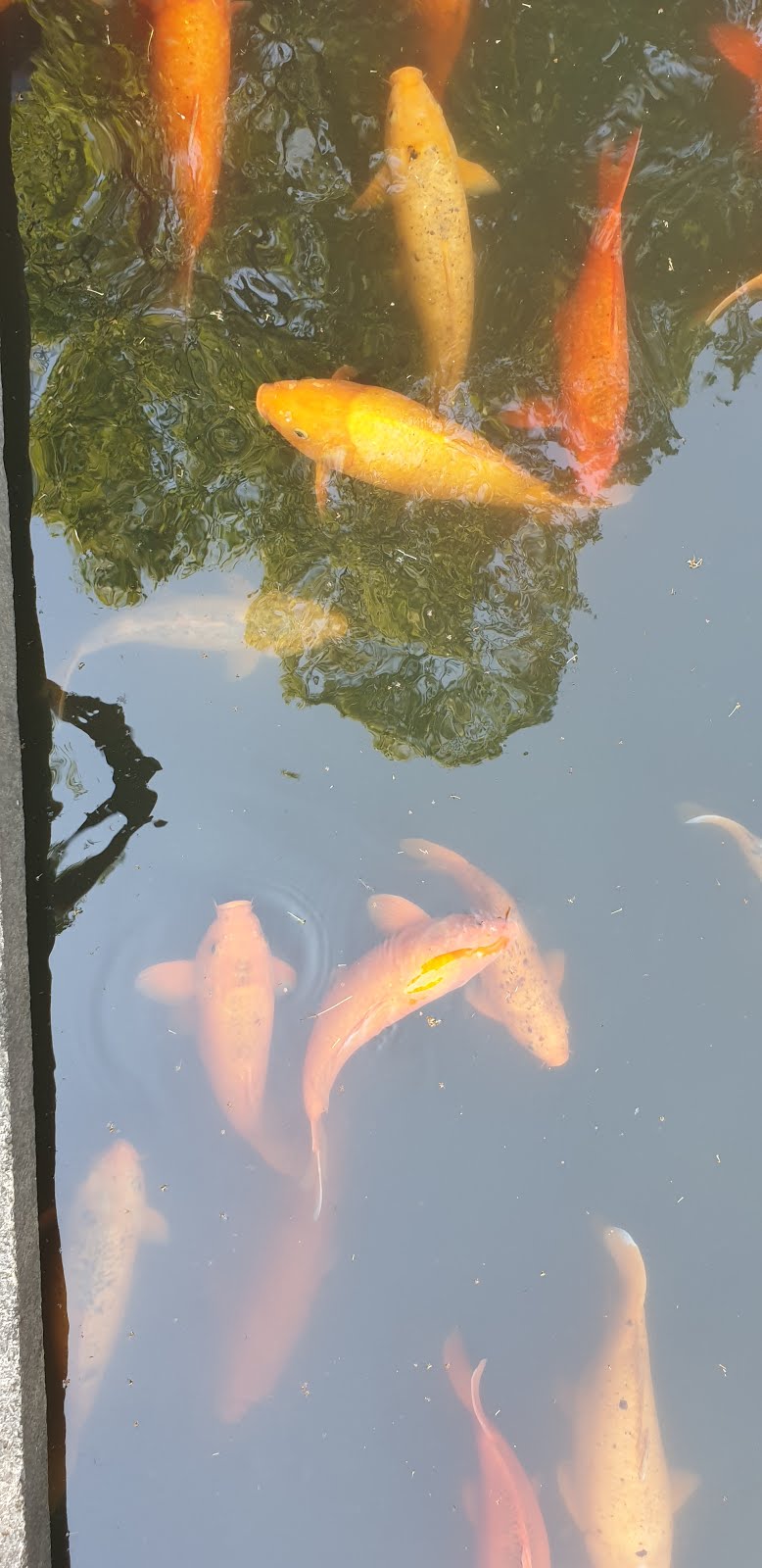
All of the ponds had a lot of fish in them
 

It was a pleasant afternoon, for both a stroll through the gardens


In and out of the rockery on narrow pathways


And to look inside the buildings that were sparsely furnished


There was even an area set aside for entertainment.


Old Shanghai, Shanghai, China

The old Shanghai refers to a small area of Shanghai that used to be walled in and remained that way until about 1912 when all but a small section of the wall was demolished.  With the advent of the concessions, Old Shanghai became the administrative center until later when it became a shopping complex.

Now it has many restored historical buildings as well as new buildings in a somewhat traditional style that has become one of Shanghai's main tourist attractions, housing many shops and restaurants.

The "Old Town" is not exclusively old, as you still have a chance to take in the atmosphere if you wander into the quaint side streets.

But, on first viewing walking down the street towards the complex, I'm not sure I'd go as far as to say this is in reality old Shanghai, except for what appears to be a true representation of it architecturally. 

The buildings, which are shops and restaurants, are set out symmetrically, with streets, alleyways, and squares which may prove that it was specially built for the tourists, and no mechanized traffic.


Anyway...

The buildings are magnificent, and a photographer's delight, and you'd finish up having hundreds of photos by the time you leave.  All the buildings are exquisite representations of traditional Chinese architecture. 


As for buying stuff, remember if you're not Chinese you have the sucker tourist stamp on your forehead, so be prepared to walk away if the vendors will not bargain.  

Nothing here is worth the price tag and in our group discounts like from 130 RMB to 50 RMB and from 1 for 1,200 to 2 for 950 RMB are common.

Here common t-shirts that we can get for 3 dollars back home start at 150 RMB which is roughly 35 dollars.  It's that kind of market.

We end up is a tea room, on the third floor of the meeting point below, and discover all the tour guides sitting around a table counting money, and I have to say it's the most $50 notes I've ever seen in one place.  

It is, we were told, where they discussed 'strategy'.

Monday, July 27, 2020

West Lake, Hangzhou, China. The gardens, and a cruise on the lake.

Next is our visit to the West Lake and surrounding gardens

West Lake is a freshwater lake in Hangzhou, China. It is divided into five sections by three causeways. There are numerous temples, pagodas, gardens, and artificial islands within the lake.

Measuring 3.2 kilometers (2 miles) in length, 2.8 kilometers (1.7 miles) in width, and 2.3 meters (7.5 feet) in average depth, the lake spreads itself in an area totaling 6.5 square kilometers (2.5 square miles).

The earliest recorded name for West Lake was the "Wu Forest River", but over time it changed to two distinct names.  One is "Qiantang Lake", due to the fact that Hangzhou was called "Qiantang" in ancient times.  The other, "West Lake", due to the lake being west of the city


It's about to get busy, with a number of activities planned, and the warmth of the day is starting to make an impact.

The tour starts in the car park about a kilometer away, but the moment we left the car park we were getting a taste of the park walking along a tree-lined avenue.


When we cross the road, once again dicing with death with the silent assassins on motor scooters.


We are in the park proper, and it is magnificent, with flowers, mostly at the start hydrangeas and then any number of other trees and shrubs, some carved into other flower shapes like a lotus.


Then there was the lake and the backdrop of bridges and walkways.

.

And if you can tune out the background white noise the place would be great for serenity and relaxation.


That, in fact, was how the boat ride panned out, about half an hour or more gliding across the lake in an almost silent boat, by an open window, with the air and the majestic scenery.


No, not that boat, which would be great to have lunch on while cruising, but the boat below:


Not quite in the same class, but all the same, very easy to tune out and soak it in.


It was peaceful, amazingly quiet, on a summery day


A pagoda in the hazy distance, an island we were about to circumnavigate.

Of all the legends, the most touching one is the love story between Bai Suzhen and Xu Xi'an. Bai Suzhen was a white snake spirit and Xu Xi'an was a mortal man.

They fell in love when they first met on a boat on the West Lake, and got married very soon after.

However, the evil monk Fa Hai attempted to separate the couple by imprisoning Xu Xi'an. Bai Suzhen fought against Fa Hai and tried her best to rescue her husband, but she failed and was imprisoned under the Leifeng Pagoda by the lake.

Years later the couple was rescued by Xiao Qing, the sister of Baisuzhen, and from then on, Bai Suzhen and Xu Xi'an lived together happily.

The retelling of the story varied between tour guides, and on the cruise boat, we had two.  Our guide kept to the legend, the other tour guide had a different ending.

Suffice to say it had relevance to the two pagodas on the far side of the lake.


There was a cafe or restaurant on the island, but that was not our lunch destination.


Nor were the buildings further along from where we disembarked.

All in all the whole cruise took about 45 minutes and was an interesting break from the hectic nature of the tour.

Oh yes, and the boat captain had postcards for sale.  We didn’t buy any.
 

Lunch


At the disembarkation point there was a mall that sold souvenirs and had a few ‘fast food’ shops, and a KFC, not exactly what we came to China for, but it seemed like the only place in town a food cautious Australian could eat at.


And when tried to get in the door, that's where at least 3 busloads were, if they were not in the local Starbucks.  Apparently, these were the places of first choice wherever we went.

The chicken supply by the time we got to the head of the line amounted to pieces at 22.5 RMB a piece and nuggets.  Everything else had run out, and for me, there were only 5 pieces left.  Good thing there were chips.

And Starbucks with coffee and cheesecake.

At least the setting for what could have been a picnic lunch was idyllic.


Tuesday, June 30, 2020

The Pagoda Forest, near Zhengzhou City, Henan Province, China

The pagoda forest

After another exhausting walk, by now the heat was beginning to take its toll on everyone, we arrived at the pagoda forest.

A little history first:

The pagoda forest is located west of the Shaolin Temple and the foot of a hill.  As the largest pagoda forest in China, it covers approximately 20,000 square meters and has about 230 pagodas build from the Tang Dynasty (618-907) to the Qing Dynasty (1644-1911).

Each pagoda is the tomb of an eminent monk from the Shaolin Temple.  Graceful and exquisite, they belong to different eras and constructed in different styles.  The first pagoda was thought to be built in 791.

It is now a world heritage site.


No, it's not a forest with trees it's a collection of over 200 pagodas, each a tribute to a head monk at the temple and it goes back a long time.  The tribute can have one, three, five, or a maximum of seven layers.  The ashes of the individual are buried under the base of the pagoda.

The size, height, and story of the pagoda indicate its accomplishments, prestige, merits, and virtues. Each pagoda was carved with the exact date of construction and brief inscriptions and has its own style with various shapes such as a polygonal, cylindrical, vase, conical and monolithic.


This is one of the more recently constructed pagodas


There are pagodas for eminent foreign monks also in the forest.

From there we get a ride back on the back of a large electric wagon


to the front entrance courtyard where drinks and ice creams can be bought, and a visit to the all-important happy place.


Then it's back to the hotel.

Thursday, June 25, 2020

The Shaolin Temple, near Zhengzhou City, Henan Province, China

The Shaolin Temple

Where is the Shaolin Temple?

Dengfeng Maps, Map of Shaolin Temple & Mount Song

It is located in Dengfeng Ave, Dengfeng, Zhengzhou, Henan, China, at the southern foot of Mount Song, 13 km northwest of Dengfeng City, Zhengzhou City, Henan Province.

A map of the Temple grounds, which would come in handy before you enter the grounds, so that you have some idea of what there is to see:

The structures and architecture of Shaolin Temple | Kung fu ...

A bit of history:

The Shaolin Temple was originally built in 495 during the Northern Wei Dynasty (368-534).  For over 1500 years, Shaolin Temple has developed through good and bad times.  The temple was firstly destroyed in the Northern Zhou Dynasty (557-581), then rebuilt much later as the Zhihu Temple.  In the Sui Dynasty (581-618) the temple was renamed Shaolin and became one of the largest Buddhism monasteries in North China.

Good fortune in the early Tang Dynasty (618-907) was followed by bad fortune in the later of Tang Dynasty, it improved during the Song Dynasty (960-1279) until 1312 in Yuan Dynasty (1271-1368) where it returned to its former glory.  The Ming Dynasty (1368-1644) also made contributions to the development of Shaolin Temple.

Due to the wars of the modern era much of the Temple was destroyed.


The Shaolin Temple, nestled in the forested mountains of Henan, its the birthplace of Kung Fu and Zen Buddhism. The Shaolin Temple embraces many exciting attractions, such as the Hall of Heavenly Kings (Tianwangdian), and the Mahavira Hall (Daxiongbaodian)

This is not a single building, that's not how the Chinese work.  It’s a whole host of buildings, the first of which is up some steps, through a gate, then along a tree-lined avenue with monument stones to some more steps, past a cauldron burning incense, and then to the temple.  There are several monks inside.

The front entrance:


Inside the entrance building, there are some large statues that I'm guessing are there to scare away the wrong sort of people


Once past these characters, you are on a walkway between pagodas where there are trees, and sculptures


and through the next pagoda brings you to the first of the temples.  There are three doors and three buddas.  This is through the middle door


And no you can't go inside, you just stand on the outside looking in.


In one part of the temple there were three monks, and, believe it or not, they were all on their mobile phones.

This is certainly not ancient times, so what did the monks do before mobile communications?

Up some more stairs to the next building,


And so on till we reach the one at the top.  Outside each is a cauldron burning incense, and that aroma hangs on the air everywhere you go in the compound.


Then it's a case of what goes up must come down, and strangely enough, it doesn't take as long to go back down, and in doing so we got to see and hear a bit of singing by the monks.

There was a story to go with the various buildings and other aspects but I didn't hear half of it, and couldn't understand our guide for the rest.

All in all, it was an interesting place, but still not worth the money we paid.

Wednesday, June 24, 2020

Shaolin Kung Fu, near Zhengzhou City, Henan Province, China

After leaving the hotel in Zhengzhou, what was once one of the eight ancient capitals of China, we are going to Dengfeng city, and the home of China’s most famous martial art - Shaolin Kung Fu.

The Shaolin Temple nearby is the origin of Chinese Zen Buddhism, and the Songyang Academy, called “the Centre of Heaven and Earth” is located 87 Km from Zhengzhou, or, as we were advised, a 2 hour drive.  It will be scenic because we are heading towards the mountains.

As one of the four ancient Song Dynasty Academies, Songyang Academy is one of many schools in the province.  It is both on a large-scale, is quite spectacular, and is a comprehensive Wushu training base where students are trained to spread the Shaolin Wushu Kung fu style at home and abroad.

There is a 500 seat demonstration hall where you are able to observe 30 minutes of various martial arts in shows starting on the hour.

Outside there is a specific area that generally has about 600 trainees learning kung fu elements during the day, but can hold 5,000 [ep[;e when outdoor performances are required.

The kung fu school


The thing you notice most about the kung fu school is it's size and then the number of buses which tells you that it is a popular tourist stop.

And with that size comes long distances between the car park and the venues we need to go to, the first of which is about half a km, and that's just to get to the ticket plaza.


But, it is pleasantly set out and is quite a large number of shops for both souvenirs and food


We pass by some of the students going through their paces


From there it's another long, long walk to the show arena, where we're supposed to see various kung fu elements on display.  We watched this for a few minutes, then headed off towards the hall for a more intense demonstration of kung fu, and because there is limited seating we have to start lining at the head of the queue to get a seat.

But...

Everyone else has the same idea and we join the throng which then becomes a ride, and true to the Chinese they start finding ways to push in, even using the imaginary friend somewhere ahead in the queue.

The doors open and then it's open slather, with the hoards pushing from behind and sliding up the side to get in first.  We go with the tide, and manage to get in and find a seat though we were separated from three of our group.

It was an interesting show even though not one word of English was spoken, which from our point of view was a disappointment because we had no idea what was going on.


However...

It wasn’t hard to follow


What the performers were doing was relatively self-explanatory, and quite fascinating especially the guy who broke a sword over his head, and the guy who stopped two spears penetrating the neck, both examples of very disciplined men.


Boys gave a demonstration of kung fu moves, and intensity and age increased as this progressed to the end.

Next, we were taken in hand by an instructor in Tai chi or an equivalent, I was not quite sure what it was called, and went through the twelve or maybe more moves that constituted a morning or afternoon exercise session or it could be just for relaxation.  I lasted the first session but it was a little difficult to do with my sore limbs and a bad back.

Not that I could remember any of it now other than hands overhead, hands in front, bent knees, and a few gentle kung fu hand moves.

Perhaps when I get home I might seek out someone to show me the moves.

Whilst the others were following their training instructor, I wandered about, finding a large statue


And some smaller statues


Lunch in the Zen Restaurant

After all that exercise it was time to have the lunch purportedly the same food as the king fu masters.
It's in the Zen restaurant, aptly named, and the food when it came, came thick and fast, but some of it wasn't very nice, meat with bones, tofu, a tasteless soup, but some good dishes like the vegetables and noodles with meat, without bones.

The only problem, nothing to drink except a pot of hot water.  No tea, no cold water, and if you wanted a cold drink you had to pay for it.  After paying 550 yuan why should we have to pay more for a drink when we have not had to so far.

But no cold water?  That was just not on, and when we brought this to that attention of the tour guide she just simply ignored us.  We just didn't get anything.

That basically tainted the whole experience.

After lunch,  we had the Shaolin Temple, and the Pogoda Forest to visit.

Tuesday, May 26, 2020

The Forbidden City, Beijing, China

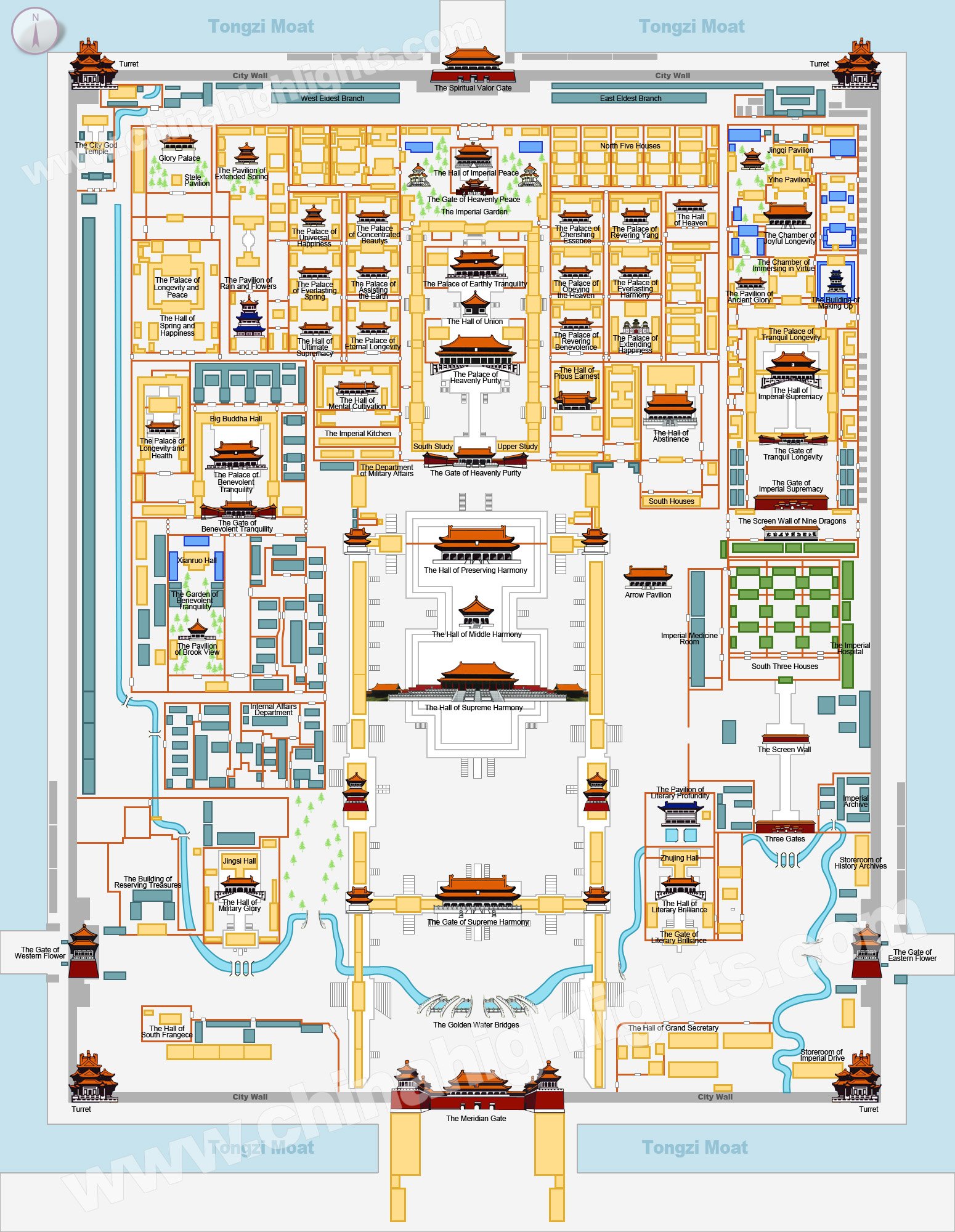
Now we're walking to the Forbidden City, and it seems like we're walking for miles and we're practically exhausted before we get started on the main tour.  I'm not sure if we received a map of the city, but one is certainly needed so that you can navigate the many features, buildings, and walkways.


There are tour groups everywhere in the large courtyard outside the gate, most likely getting a lecture on the last of the Chinese emperors about that time Sun Yat-Sen proclaimed the new China around 1912.  We were no exception, and it was an interesting way to spend the time waiting to get in.  It was a tale of intrigue, interwoven with a 3-year-old emperor, and a scheming concubine who becomes the Emperor's favorite, enough to bear him a son and successor.

Bribery and corruption at its best.

But its history runs something like this:

The Forbidden City is was once the imperial and state residence of the Emperor of China, as well as the center of government, from the Ming Dynasty to the Qing Dynasty, or 1420 to 1924.

It was built from 1406 to 1420 when the Yongle Emperor moved the capital from Nanking to Beijing and consists of about 980 buildings, and 8,886 bays of rooms (not the 9,999 as prescribed in myth) and covers 180 acres.  Over the 14 years, a million workers used whole logs of wood from the jungles of southwestern China, marble from quarries near Beijing, specially made golden bricks from Suzhou


Since 1925 it has been a museum and is the largest number of preserved wooden structures in the world.


The city is surrounded by a wall 7.9 meters high, and a moat that is 6 meters deep and 52 meters wide.  A tower sits at each of the four corners.  Each side has a gate, the north is called the Gate of Divine Might, the south is called the Meridian gate.  East and west are called East Glorious Gate and West Glorious Gate respectively.


But, back in the courtyard, we are ready to go in and follow the tour guide who has switched from her amplified microphone to a whisper device we all wear in our ears.  She talks and we listen.

We all make it through and regroup on the other side. This is where the fun begins because we are about to meet a large percentage of the 80,000, they let for the day.


It seems to me they have all arrived at the same time, although by the time we get to the entrance gate, it is very well organized, bags are scanned, people are scanned, and you're in.  

After crossing one of the seven Golden Water bridges, you begin to get some idea of the size and scope of the City, and in the distance, the first of the buildings, The Gate of Supreme Harmony.  On a hot day, that could be a long and thirsty walk.


From there it is one pagoda after another with buildings that surround the edge of the whole Forbidden City, as does the moat.


By the time we get to the second courtyard, it was time to have ice cream as a refresher.  Others head up to another exhibit, and it's just too many stairs for us.

After this, it's a walkthrough another courtyard, heading up and down some more stairs, we go and see the museum, with priceless relics from past emperors.


There are areas like the outer courtyard, the inner courtyard, yet another courtyard, and the gardens where the concubines walked and spent their leisure time.  It is not far from the emperor's wives living quarters, though there's precious little left of the furniture, other than a settee and two rather priceless so-called Ming dynasty vases.

We get into the bad habit of calling all of the vases Ming dynasties.  Above is one of the inner courtyards there were living quarters, and that tree is over 300 years old.


Out through some more alleyways and through an entrance that led to the area where the concubines lived, very spacious, bright, and filled with trees, plants, and walkways through rocky outcrops.


The whole area was made up of living quarters and waterways, rocks and paths, all very neatly set out, and it looked to be a very good place to live.


This is an example of the living quarters, overlooking the gardens

 And there were several pagodas


From there its a quick exit out the northern entrance, and another longish walk to our bus, which arrives at the meeting point shortly after we do.


That done, the Beijing tour guide has completed her section of our China experience, and we're ready to move onto the next, but not before getting onto the high-speed train and head for X'ian.

And a new tour guide by the name of Sam.